

What Is a Bag n Box Soda System (And Why It Matters for Your Business)
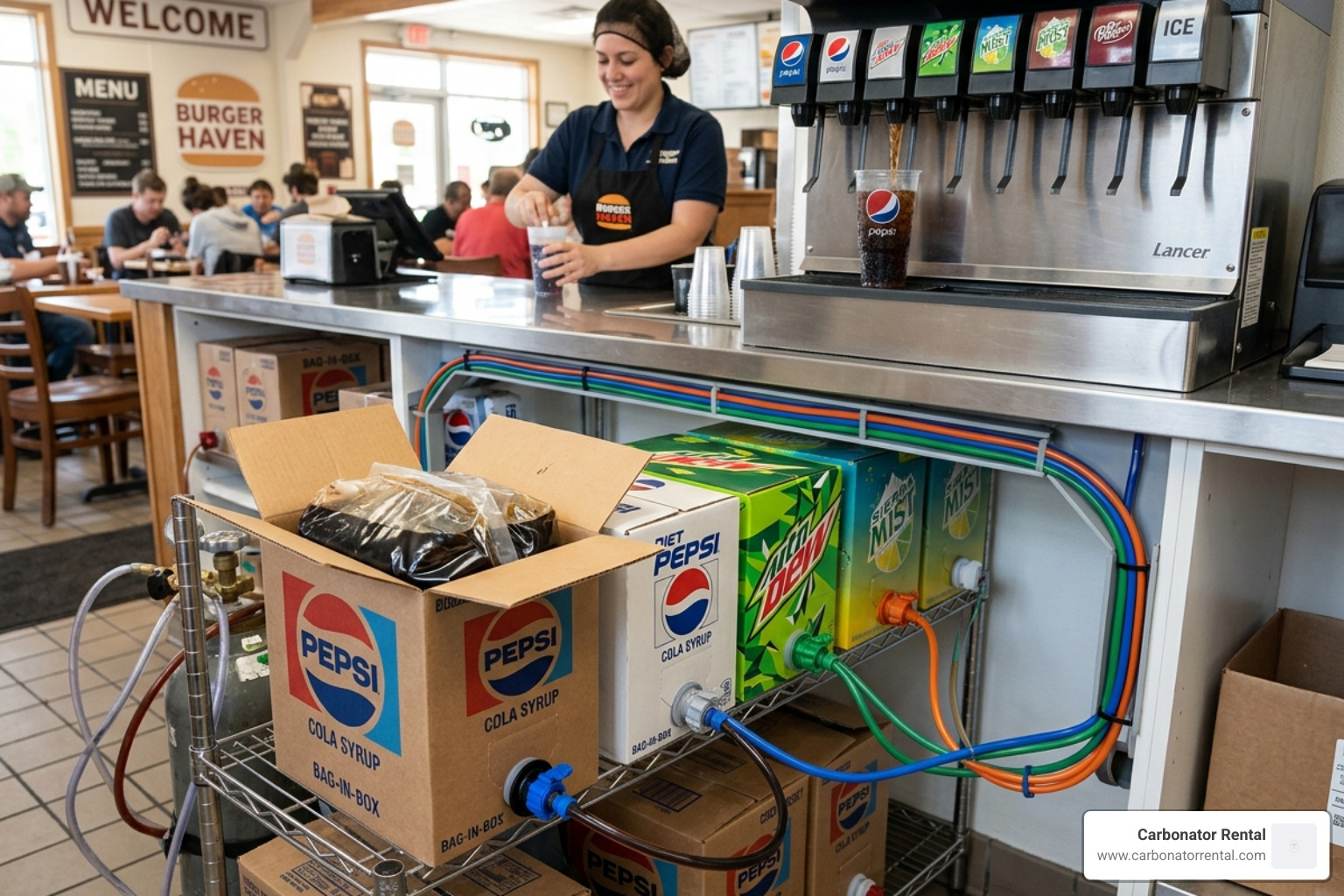
A bag n box soda system is the industry-standard method for dispensing fountain beverages in restaurants, bars, and cafes. Here's a quick breakdown:
| Component | What It Does |
|---|---|
| BIB syrup bag | Holds concentrated soda syrup (typically 5 gallons) |
| Cardboard box | Protects the bag during storage and transport |
| Syrup pump | Pushes syrup from the bag to the dispenser |
| CO2 supply | Carbonates the water at the point of dispensing |
| Dispensing valve | Mixes syrup and carbonated water at the correct ratio |
The result? A fresh, perfectly mixed soda — every single pour.
Walk into almost any restaurant or bar that serves fountain drinks, and there's a good chance a bag n box soda system is quietly doing the heavy lifting behind the scenes. It's tucked away in a back room or under the counter, but it's the engine behind every ice-cold soda served to your guests.
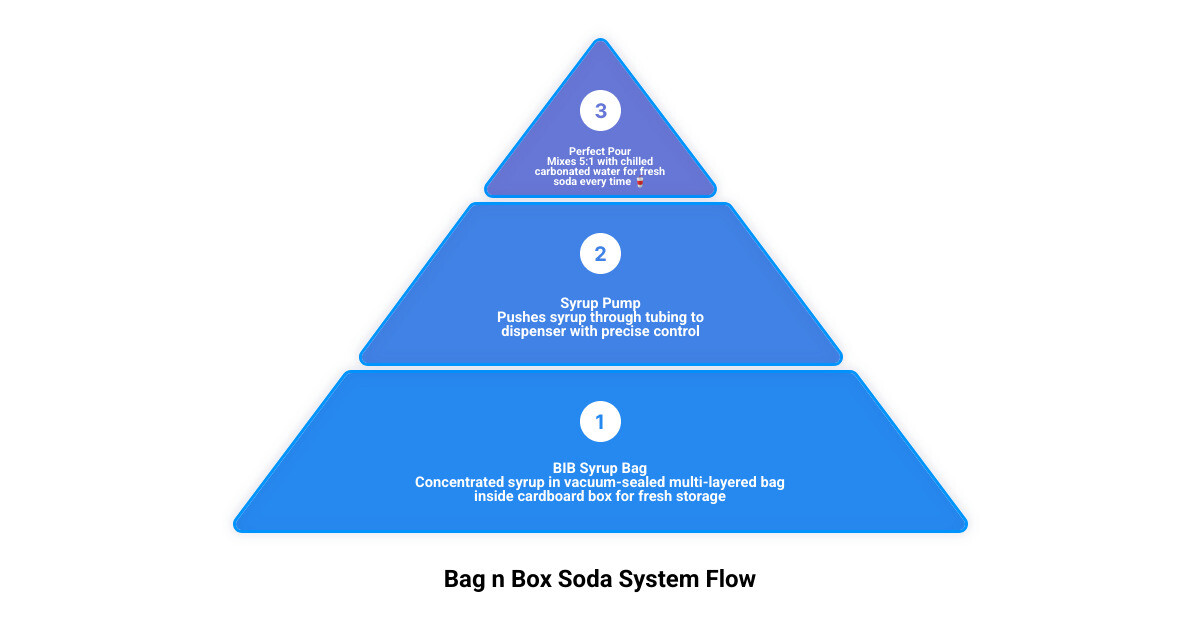
The concept is straightforward. A concentrated soda syrup is sealed inside a multi-layered plastic bag, packed inside a sturdy cardboard box. That bag connects via tubing to your soda dispenser, where it gets mixed with chilled, carbonated water at a precise ratio — usually 5 parts water to 1 part syrup.
No pre-mixed bottles. No stacking cases of cans. No waste.
One 5-gallon BIB bag replaces dozens of individual cans or bottles, takes up a fraction of the storage space, and keeps syrup fresher for longer because the bag collapses as it empties, cutting off air exposure entirely.
For restaurant and bar owners managing high drink volumes, that efficiency isn't just convenient — it's a real operational advantage.
How a Bag n Box Soda System Works
To understand the bag n box soda system, you have to look at the "back of house" magic. While your customers only see the sleek dispenser or bar gun, the real work happens where the syrup is stored.
At its core, a Bag In Box Soda System: What It Is And How It Works relies on a vacuum-sealed environment. The syrup is housed in a multi-layered plastic bag that is incredibly durable. This bag is then placed inside a corrugated cardboard box for easy stacking and transport.
As we dispense soda, a pump draws the syrup out. Because the bag is flexible, it collapses on itself as the liquid leaves. This is a game-changer for freshness. In traditional canisters, air enters as liquid leaves, leading to oxidation and flavor loss. With a BIB system, the syrup never touches the air until it hits the cup. This design can extend the shelf life of your syrup significantly compared to older methods.
We often recommend these systems because of "point-of-service mixing." Instead of shipping heavy, water-filled bottles, you are only storing the concentrate. The actual "soda" is created the moment the lever is pulled. This ensures the freshest possible taste and the highest level of carbonation.
To see the difference in efficiency, look at how BIB stacks up against traditional packaging:
| Feature | Bag n Box Soda System | Cans & Bottles |
|---|---|---|
| Storage Space | Low (Stackable boxes) | High (Bulky cases) |
| Waste | Minimal (Recyclable cardboard) | High (Plastic/Aluminum) |
| Cost Per Ounce | Very Low | High |
| Consistency | High (Calibrated mixing) | Variable (Flatness issues) |
| Labor | Low (Quick bag swaps) | High (Constant restocking) |
For more details on the hardware involved, check out our guide on beverage equipment.
The Role of the Carbonator in a Bag n Box Soda System
If the syrup is the soul of the drink, the carbonator is the heartbeat. Without it, you’re just serving sweet juice. The carbonator’s job is to take plain tap water—usually filtered—and marry it with CO2 gas under high pressure.
We supply bulk CO2 tanks to bars and restaurants across Philadelphia and New Jersey to ensure they never run out of "the fizz." Inside the carbonator, water is chilled and pumped into a pressurized tank filled with CO2. Because cold water absorbs CO2 much better than warm water, the cooling process is vital for that aggressive, refreshing sparkle.
The resulting sparkling water is then sent through high-pressure hosing to the dispenser. According to research on beverage dispensing products, maintaining consistent water pressure and CO2 levels is the only way to ensure every drink has the same "bite" from the first sip to the last.
Mixing Ratios and Flavor Consistency in a Bag n Box Soda System
Have you ever had a soda that tasted like "flat sadness" because it was too watery? Or a drink so syrupy it felt like drinking molasses? That’s a ratio problem.
Most standard bag in box syrup brands use a 5:1 ratio. This means the dispenser mixes five parts carbonated water with one part syrup concentrate. Achieving this perfectly requires a process called "brixing."
When we install a system, we use a brix cup and a syrup separator to calibrate each valve. We measure the flow of water and syrup separately to ensure they meet the manufacturer's exact specifications. This calibration is what allows a 5-gallon BIB to produce hundreds of consistent servings.
A standard 5-gallon bag of syrup, when mixed at a 5:1 ratio, can produce approximately 30 gallons of finished soda. That is roughly 320 12-ounce servings!
Essential Components of a Soda Fountain Setup
Setting up a professional bag n box soda system requires a few specialized pieces of gear. It’s not just a box and a hose; it’s a synchronized dance of pressure and flow.
- Syrup Pumps (Flojet): These are the workhorses. Most systems use gas-driven pumps (powered by CO2 or compressed air) to pull syrup from the bag. These pumps are self-priming and can run dry without damage, which is great for when a bag finally runs out during a lunch rush.
- BIB Connectors: These are brand-specific (e.g., Coca-Cola vs. Pepsi) and screw or snap onto the bag's fitment. They are often color-coded to prevent you from accidentally hooking up Diet Cola to the Root Beer line.
- Syrup Racks: To keep things organized, we use slanted metal racks. Slanting the boxes allows gravity to help the pump extract every last drop of syrup, minimizing waste.
- CO2 Regulators: These manage the high pressure from your bulk CO2 tanks, stepping it down to a safe, usable level for the carbonator and the syrup pumps.
- High-Pressure Hosing: These lines must be food-grade and capable of handling the pressure without bursting or affecting the flavor of the beverage.
For a deeper dive into the technical specs, you can explore beverage dispensing equipment or read about Bag-In-Box - Multiplex Beverage systems.
Cooling Methods for Your Bag n Box Soda System
Nobody wants a lukewarm soda. There are three primary ways we keep your drinks icy cold:
- Cold Plates: Common in "drop-in" dispensers (the kind you see at fast-food counters with an ice bin on top). The syrup and water lines run through a heavy block of aluminum that is buried under the ice. As the ice melts, it keeps the block—and the liquid inside the lines—chilled.
- Ice Bank Cooling: Often used in countertop electric units. The machine creates a block of ice inside a water bath. The beverage lines run through this icy water. This method is great because it doesn't require a constant supply of external ice to keep the drinks cold.
- Direct Refrigeration: Less common for high-volume soda but used in some specialized or home-style units where the entire cabinet is refrigerated.
If you’re unsure which cooling method fits your Philly bar or Newark cafe, our beverage equipment installation services can help you map out the best fit for your space and volume.
Installation and Maintenance for Peak Performance
A bag n box soda system is remarkably reliable, but like any piece of commercial kitchen equipment, it needs a little love to stay at peak performance.
Proper installation is the first step. We ensure all lines are professionally clamped and labeled. We also recommend using "auto-shutoff" valves. These clever devices sense when a bag is empty and stop the flow, preventing the "fizz-only" pour that happens when the syrup runs out.
Daily and Weekly Maintenance
To keep the "sparkle" in your soda, follow this simple checklist:
- Daily: Remove the dispensing nozzles and diffusers. Soak them in warm water (no harsh chemicals!) to remove any syrup buildup.
- Weekly: Wipe down the syrup connectors and check the CO2 levels on your regulators.
- Monthly: Check the air filters on electric cooling units to prevent overheating.
- Seasonally: We recommend professional beverage equipment maintenance services to deep-clean the lines using a system like BevClean, which removes any organic deposits that can affect flavor.
Troubleshooting Common Issues
- Flat Soda: Usually a CO2 issue. Check if the tank is empty or if the carbonator has been unplugged.
- Too Much Foam: The drink might be too warm. Check your ice levels or ensure the cooling unit is functioning.
- No Syrup Flow: Check if the BIB connector is loose or if the bag is simply empty.
Frequently Asked Questions about BIB Systems
How many servings are in a 5-gallon BIB?
A standard 5-gallon BIB of syrup yields about 30 gallons of finished soda. If you are serving 12-ounce drinks (with ice), you can expect roughly 320 to 350 servings per bag. This makes it incredibly cost-effective for high-traffic venues in places like Atlantic City or Wilmington.
What is the standard mixing ratio for soda syrup?
The industry standard is 5:1 (five parts water to one part syrup). However, some specialty juices or energy drinks may use a 4:1 or even 3:1 ratio. Always check the label on the box before brixing your system.
Can I use a BIB system for non-carbonated drinks?
Absolutely! Many of our clients use the same pumps and racks to dispense iced tea, lemonade, and juices. The only difference is that the dispenser bypasses the carbonator for those specific valves, mixing the syrup with plain chilled water instead.
Conclusion
At Carbonator Rental, we’ve been "Powering the Perfect Pour Since 1955." As a family-run business based right here in Philadelphia, we understand that your beverage program isn't just a side item—it's a major profit center and a key part of your customer's experience.
Whether you are running a historic diner in Princeton, a busy bar in Newark, or a seasonal stand in Atlantic City, a bag n box soda system is the most efficient way to serve high-quality drinks. We offer everything you need to get started, from wholesale bag in box syrup distribution to the latest dispensing hardware.
Our USP is simple: full service, local support, and dependable delivery services. We don't just drop off boxes; we ensure your equipment is calibrated, your CO2 is full, and your staff is trained. With flexible rental and leasing options, we make it easy to upgrade your system without the massive upfront cost.
Ready to bring the sparkle to your business? Get started with professional beverage equipment from Carbonator Rental today. We serve Pennsylvania, New Jersey, and Delaware with the personal touch only a local partner can provide.
