


What Is Soda Water CO2 and Why Does It Matter?
Soda water CO2 is the dissolved carbon dioxide gas that gives sparkling water its signature fizz — and it's the engine behind every soda fountain, bar gun, and home carbonator in the world.
Here's a quick answer to what you need to know:
| Question | Quick Answer |
|---|---|
| What is soda water CO2? | Food-grade carbon dioxide gas dissolved into water under pressure |
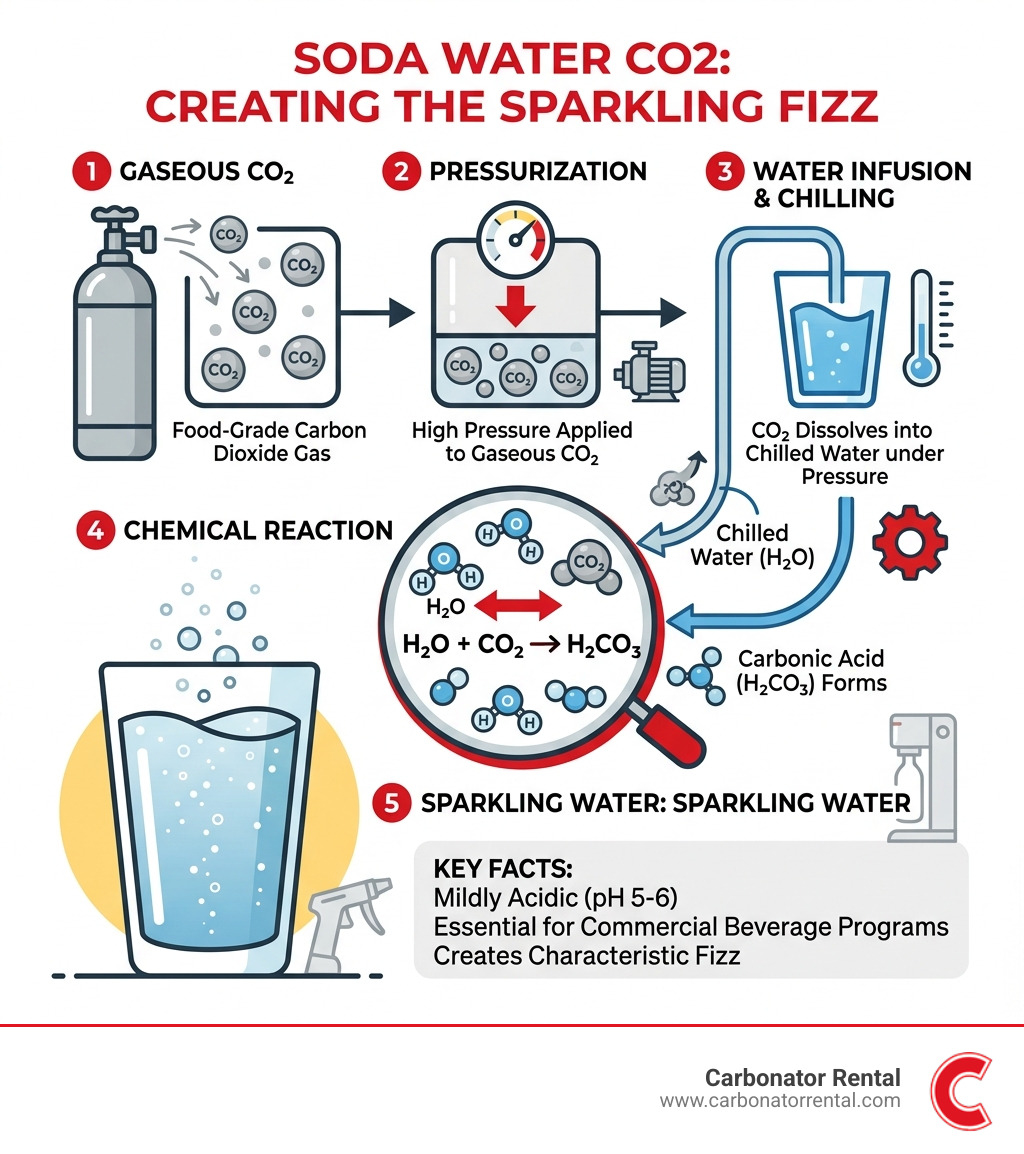
| How is it made? | CO2 is injected into chilled water at 60–120 psi, forming carbonic acid |
| What pH does it create? | Between 5 and 6 — mildly acidic, far less than soft drinks |
| How is CO2 supplied commercially? | Via pressurized bulk tanks or refillable cylinders, typically at ~100 psi |
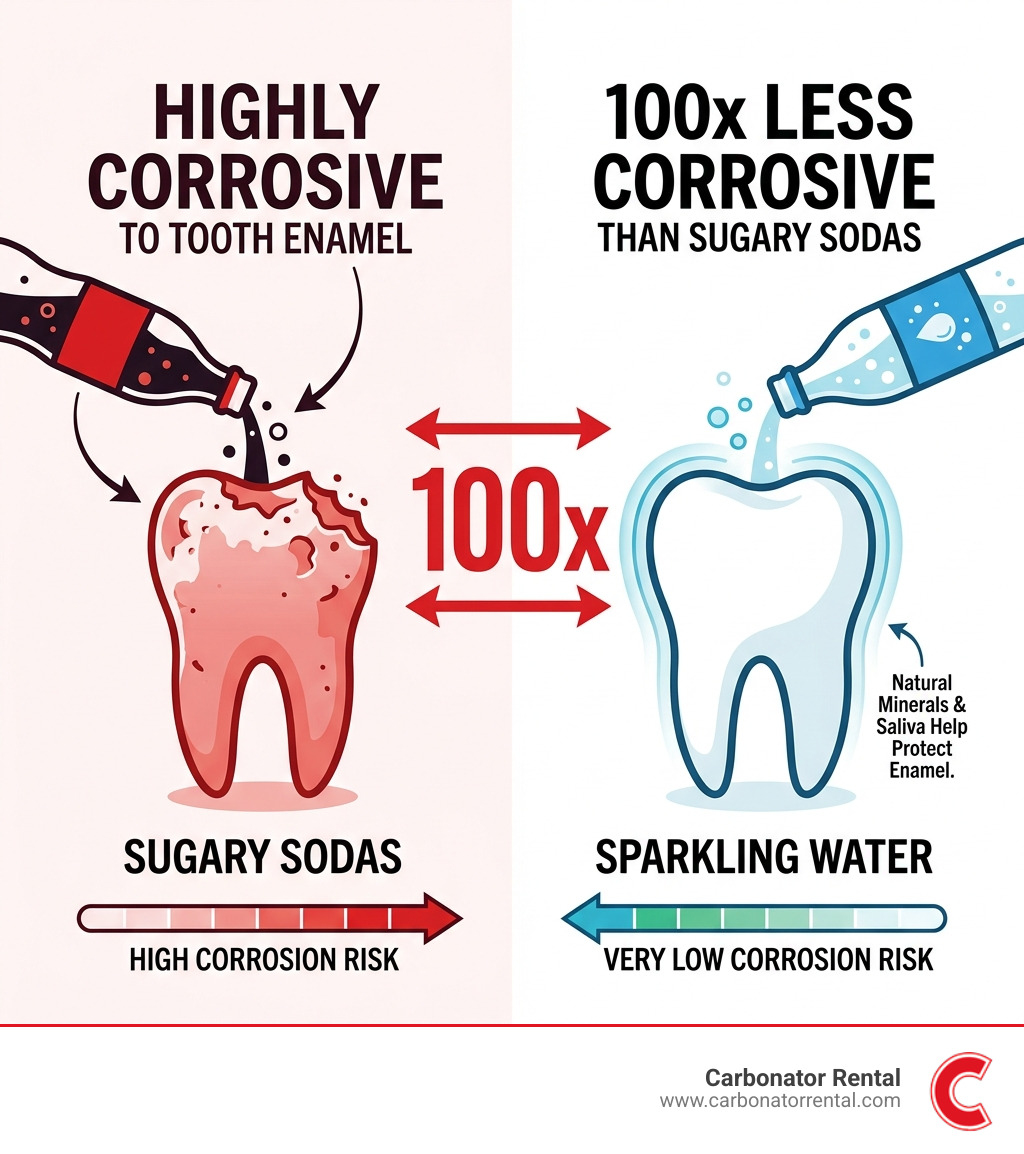
| Is it safe? | Yes — carbonated water is about 1% as erosive to teeth as regular soft drinks |
Whether you run a bar, restaurant, or café, CO2 is the invisible ingredient keeping your beverage program alive. Without a reliable supply, your soda guns go flat, your cocktails lose their sparkle, and your customers notice.
When Joseph Priestley accidentally infused water with carbon dioxide over a brewery vat in 1772, he called it his happiest discovery. Fast-forward to April 2026, and that same basic chemistry now powers billions of dollars in commercial beverage operations worldwide.
Understanding how soda water CO2 works — and how to manage it — is one of the most practical things a bar or restaurant operator can do.
Key soda water co2 vocabulary:
- Restaurant carbonation system
- water carbonation machine
The Science and History of Carbonation
The history of carbonated water is as much about accidental discovery as it is about engineering. While natural mineral springs have been prized for their effervescence for centuries, the ability to create "artificial" sparkling water changed the beverage industry forever.
It all started in 1772 with Joseph Priestley, who suspended a bowl of water over a beer vat at a brewery in Leeds, England. He discovered that the heavy gas hovering over the fermenting beer (which we now know is CO2) infused the water with a pleasant, tangy fizz. Priestley felt a "peculiar satisfaction" in drinking it, though he didn't immediately see the commercial potential.
That potential was realized by Jacob Schweppe, who refined the process and founded his company in 1783. By the early 19th century, the first commercial carbonated water factories were popping up, and the iconic "Codd-neck" bottles—which used a glass marble and a rubber gasket to hold the pressure—became a staple of the era.
Today, we use high-tech carbonators, but the fundamental physics remains the same. We rely on Henry’s Law, which states that the amount of dissolved gas in a liquid is proportional to its partial pressure above the liquid. In simpler terms: if you want more bubbles, you need more pressure.
The Chemical Properties of Soda Water CO2
When we force soda water co2 into a liquid, we aren't just mixing gas and water; we are creating a chemical reaction. A small portion of the CO2 (about 0.17%) reacts with the water to form carbonic acid (H2CO3).
This reaction is what gives soda water its slightly sharp, acidic bite. Here are some key scientific facts about the process:
- pH Levels: Plain water has a neutral pH of 7.0. Carbonated water typically sits between a pH of 5 and 6, making it mildly acidic. For comparison, stomach acid is significantly more acidic, and sugary sodas often dip below a pH of 3.
- Solubility and Temperature: CO2 is much more soluble in cold water. This is why we recommend chilling water to approximately 4°C (39°F) before carbonating. If the water is warm, the gas won't "stick," resulting in weak, short-lived bubbles.
- Pressure Dynamics: The Science Behind Soda Water explains that for optimal fizziness, water is typically subjected to pressures between 60 and 120 pounds per square inch (psi).
Understanding Soda Water CO2 in Modern Beverage Systems
In a commercial setting—whether you’re in Philadelphia, PA, or Newark, NJ—the "magic" happens behind the scenes in the beverage room. A modern commercial system consists of a CO2 source, a high-pressure regulator, and a carbonator.
Commercial carbonators use powerful pumps to force chilled water into a pressurized chamber filled with soda water co2. These machines usually operate at around 100 psi (690 kPa). This is significantly higher than the pressure found in a fermenting bottle of champagne, which is why bar-dispensed soda water often feels much "crisper" than bottled versions.
For businesses, the choice of equipment is vital. You might use:
- Soda Guns: Common in bars, these dispense a mix of carbonated water and syrup or plain soda water at the touch of a button.
- Soda Fountains: Standard in fast-casual restaurants, providing consistent carbonation for self-service.
- High-Pressure Tanks: These hold the food-grade CO2 necessary to power the entire system.
While SodaStream Official: Sparkling Water Makers and Gas Cylinders are excellent for home enthusiasts, commercial venues require more robust solutions. A commercial carbonator can produce gallons of soda water per hour, ensuring that even during the Friday night rush in Atlantic City, the drinks stay fizzy.
How to Manage Soda Water CO2 Refills for Your Business
Managing your gas supply is a critical part of operations. There is nothing worse than running out of CO2 in the middle of a shift. Most businesses use one of two methods:
- Cylinder Exchange: You keep several high-pressure aluminum or steel cylinders on hand. When one is empty, you swap it for a full one. These cylinders typically feature brass valves for durability and safety release valves to prevent over-pressurization.
- Bulk CO2 Delivery: For high-volume locations, a large permanent tank is installed outside or in a basement. A delivery truck refills the tank on a schedule, much like a heating oil delivery.
Safety is paramount when handling high-pressure gas. Cylinders should always be stored in a cool, dry place away from direct sunlight. If you're using a Soda Sense® | CO2 Canister Exchange or a similar service for a small café, ensure you have a backup canister ready so your service never skips a beat.
Seltzer vs. Club Soda: What’s the Difference?
Not all "bubbly water" is created equal. While soda water co2 provides the bubbles for all of them, the added ingredients change the flavor profile and the best use case for each.
| Type | Ingredients | Flavor Profile | Best For |
|---|---|---|---|
| Seltzer | Purified water + CO2 | Neutral, clean | Drinking plain, sugar-free mixers |
| Club Soda | Water + CO2 + Minerals (Sodium Bicarbonate, etc.) | Slightly salty, mineral-forward | Classic cocktails (Tom Collins, Gin Rickey) |
| Sparkling Mineral Water | Naturally carbonated or added CO2 + Natural minerals | Varies by source (earthy, crisp) | Fine dining, sipping |
| Tonic Water | Water + CO2 + Quinine + Sweeteners | Bitter and sweet | Gin and Tonics |
Club soda is specifically engineered to mimic the taste of natural mineral springs. Manufacturers add alkaline salts like sodium bicarbonate (baking soda) or potassium sulfate to balance the acidity of the carbonic acid. This creates a "rounder" mouthfeel that stands up well against the strong flavors of spirits in a cocktail.
Culinary and Mixology Uses for Soda Water CO2
Beyond the glass, soda water co2 is a secret weapon in the kitchen. The combination of carbonation and mild acidity can transform textures in cooking:
- Tempura and Batters: Substituting soda water for still water in batters creates a lighter, airier texture. The CO2 bubbles expand during frying, creating those sought-after "nooks and crannies" in fried fish or vegetables.
- Meat Tenderizing: The mild acidity of carbonic acid can help break down tough proteins. Marinating meat in soda water for 30–60 minutes before cooking can result in a more tender bite.
- Cocktail Balancing: Bartenders use the effervescence of soda water to "lift" the aromatics of a drink. The bubbles carry the scent of citrus zests and herbs directly to the drinker's nose, enhancing the sensory experience.
Sustainability and Health: The Impact of Sparkling Water
One of the biggest shifts in the beverage industry over the last decade has been the move toward sustainability. Using a carbonation system instead of buying bottled sparkling water has a massive impact on the environment.
- Plastic Waste Reduction: Statistics show that using a sparkling water maker can save approximately 71 plastic bottles per month per household. For a high-volume restaurant in Princeton or Cherry Hill, that number jumps into the thousands.
- Circular Ecosystems: By utilizing refillable CO2 cylinders and bulk gas systems, businesses can replace over a thousand single-use bottles and cans, drastically reducing their carbon footprint and waste management costs.
From a health perspective, soda water is an excellent tool for hydration. It provides the "ritual" of drinking a soda without the sugar, calories, or high fructose corn syrup. While some worry about enamel erosion, research indicates that sparkling mineral water is only about 1% as corrosive to teeth as soft drinks. The calcium and minerals in your saliva naturally help neutralize the mild acidity of the carbonic acid.
Frequently Asked Questions about Soda Water CO2
Is soda water CO2 safe for daily consumption?
Yes, it is perfectly safe. The CO2 used is food-grade, meaning it meets strict purity standards. While the beverage is mildly acidic (pH 5-6), it is significantly less acidic than stomach acid and does not impact your body's overall pH balance, as your kidneys and lungs constantly regulate CO2 levels.
How long does a commercial CO2 tank last?
This depends entirely on your volume. A standard 20lb CO2 cylinder can typically carbonate about 25 to 30 half-barrels of beer or several hundred gallons of soda water. For restaurants, we recommend having at least three cylinders on hand: one in use, one backup, and one empty ready for exchange.
What is the ideal temperature for carbonating water?
The "sweet spot" is around 4°C (39°F). If the water is too warm, the CO2 won't dissolve properly, and you'll end up with "big" bubbles that disappear almost immediately. Chilling the water ensures a fine, persistent effervescence.
Conclusion
At Carbonator Rental, we understand that soda water co2 is more than just bubbles—it's the lifeblood of your beverage service. Based in Philadelphia and serving the surrounding areas including Newark, Wilmington, and Princeton, we have been "Powering the Perfect Pour Since 1955."
We take the stress out of gas management by providing a full-service experience. From the installation of high-efficiency carbonators and soda guns to the dependable delivery of food-grade CO2 and bag-in-box syrups, we ensure your business never goes flat. Our local support team is always ready to help with maintenance or emergency service, so you can focus on what you do best: serving your customers.
Ready to upgrade your beverage program with a reliable CO2 partner? Learn more about our beverage gas services and see how we can help your business sparkle.
