

Why Under Sink Carbonators Are Changing Commercial Beverage Service
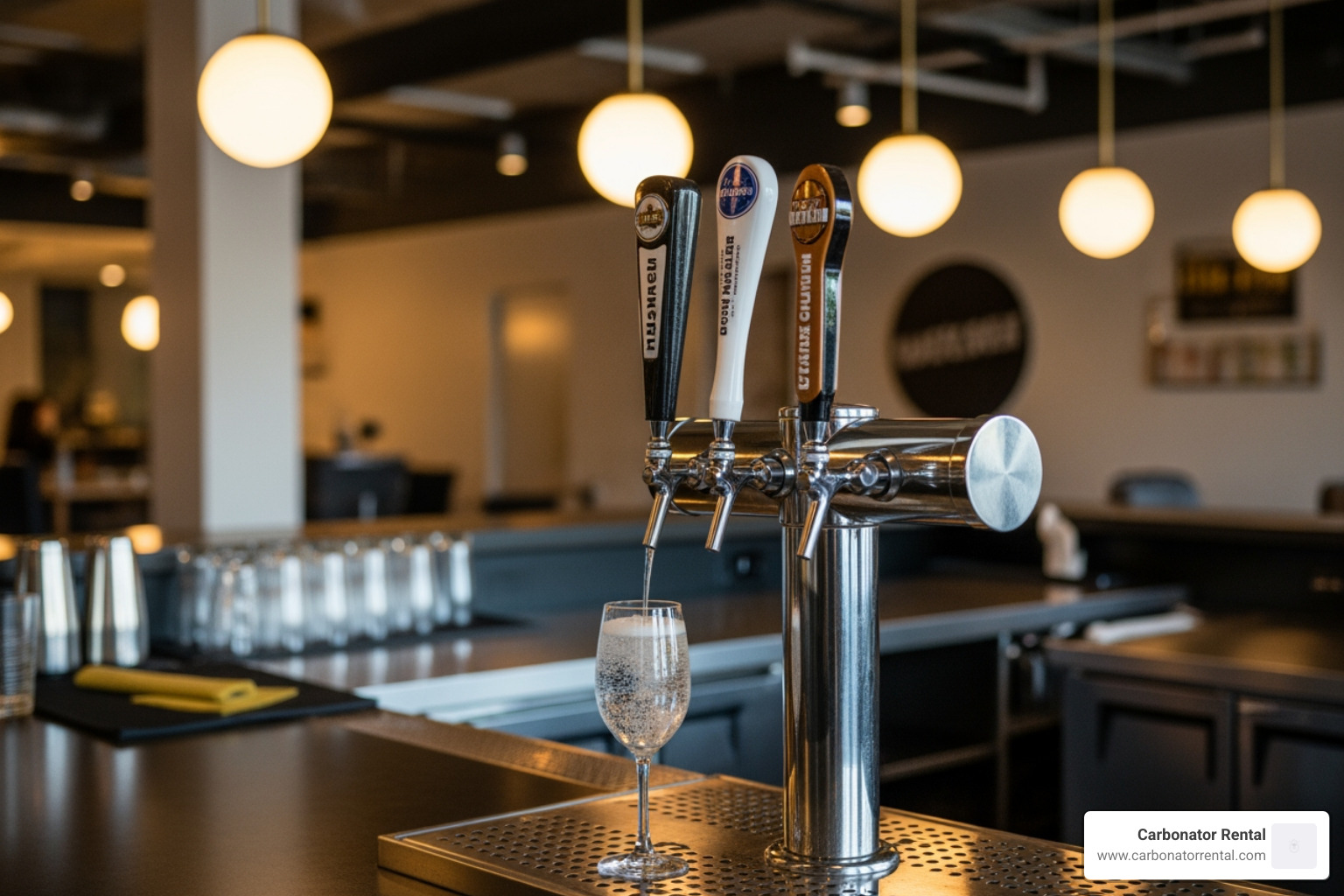
An under sink carbonator is a professional-grade system that transforms your regular water line into an on-demand sparkling water source. Installed beneath your bar or counter, it connects to your existing plumbing and a CO₂ tank to deliver perfectly carbonated water straight from a dedicated tap—no bottles, no waste, no hassle.
Quick Answer: What You Need to Know
- What it is: A compact chilling and carbonation unit installed under your counter that connects to your water supply and CO₂ tank
- How it works: Chills water to optimal temperature (40-45°F), infuses it with CO₂ at 80-100 PSI, and dispenses through a dedicated faucet
- Key benefits: Eliminates bottled water costs, saves over 1,000 plastic bottles per year, provides adjustable carbonation levels, and frees up valuable counter and storage space
- Best for: Restaurants, bars, cafes, and commercial venues serving high volumes of sparkling water or specialty beverages
- Cost considerations: Initial equipment investment plus ongoing CO₂ refills (typically every 4-6 months for commercial use) and filter changes
Whether you're looking to cut costs, reduce your environmental footprint, or simply offer better-quality sparkling water to your customers, an under sink carbonator delivers professional results with minimal maintenance. The system integrates seamlessly with existing water filtration and dispensing equipment, making it a smart upgrade for any commercial beverage operation.
For businesses already managing soda fountains, bar guns, or draft systems, adding a carbonator is a natural extension of your beverage program. It uses the same commercial CO₂ supply you may already have on-site, and professional installation ensures everything works safely and efficiently from day one.
What is an Under Sink Carbonator and How Does it Work?
At its core, an under sink carbonator is the "engine room" of your sparkling water service. While countertop models might look cute in a home kitchen, they simply can't keep up with the demands of a busy Philadelphia bistro or an Atlantic City lounge.
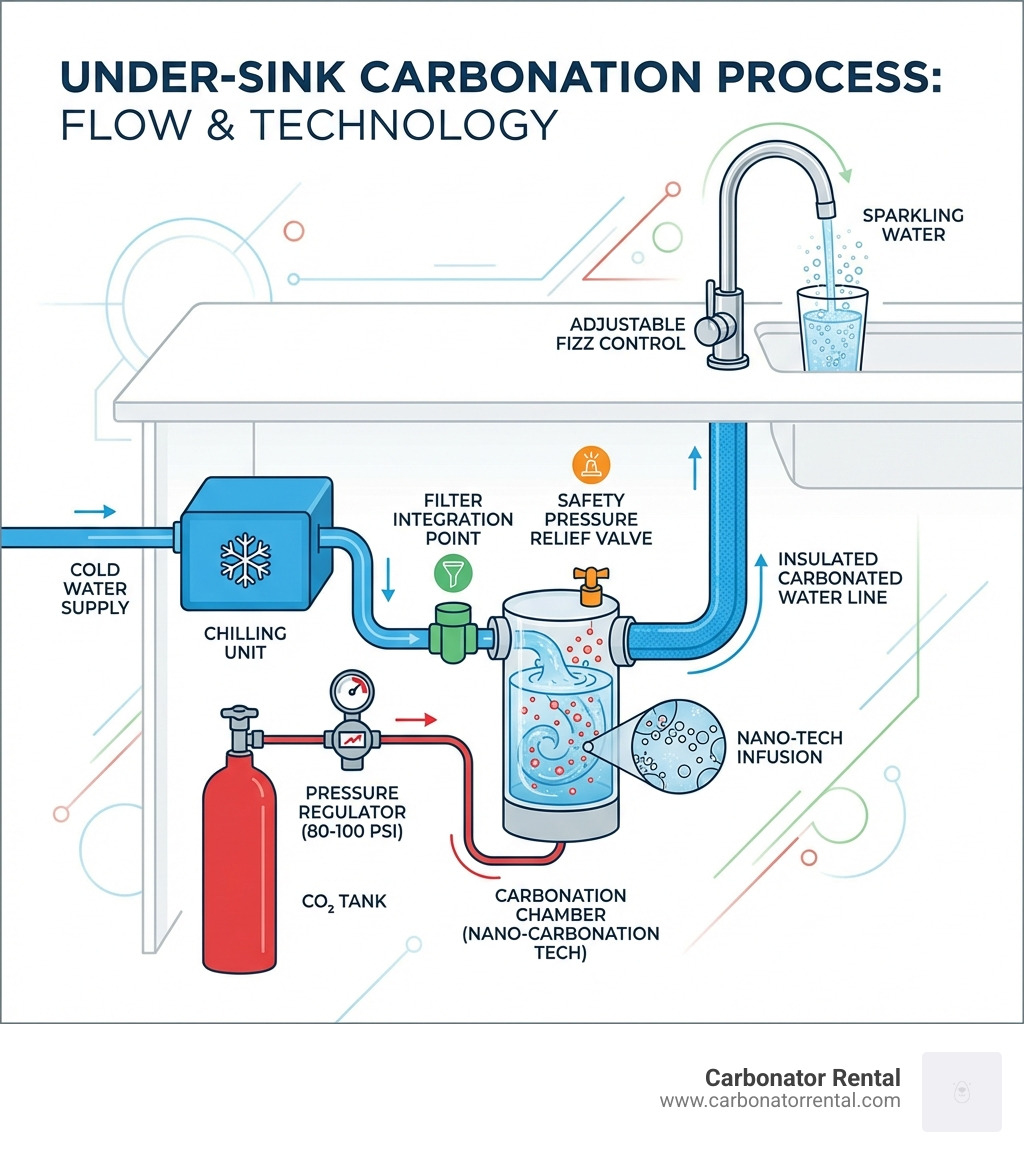
The system acts as a centralized carbonation hub. It takes standard tap water, filters it to remove impurities, chills it to a precise temperature, and then "forces" carbon dioxide into the liquid. This happens inside a pressurized tank where the magic of gas absorption occurs.
The Mechanics of an Under Sink Carbonator
To understand the mechanics, we have to look at physics—specifically, how gas interacts with liquid. Carbon dioxide dissolves much more effectively in cold water than in warm water. This is why our systems include a high-efficiency chilling unit.
- Thermal Cooling: The unit pulls heat from the water, bringing it down to a crisp 40-45°F.
- Water Displacement & Gas Absorption: Once chilled, the water enters a carbonation chamber. Modern systems use nano-carbonation technology, which enables 30% faster carbonation cycles by creating a larger surface area for the gas to bond with the water molecules.
- Pressure Regulation: For that "sweet sweet bubble" flow, the CO₂ must be delivered at a much higher pressure than what you’d use for a keg of lager. While beer systems usually top out at 60 PSI, a dedicated under sink carbonator requires 80-100 PSI to achieve that sharp, professional-grade fizz.
For those interested in the high-end hardware we often integrate into commercial spaces, you can DOWNLOAD BROCHURE Download BrochureInterested in the HydroTap by Zip Water?Explore our brochure to find out more.DOWNLOAD BROCHURE to see how sophistication meets hydration.
Achieving the Perfect Fizz Level
Not all customers want the same level of carbonation. Some prefer a light "medium" sparkle for a delicate cocktail, while others want a full-throttle seltzer that bites back.
Professional Beverage Dispensing Equipment often features scaling wheels or volume controls. These allow bartenders to adjust the saturation pressure. By turning a dial on the mixer tap or the hub itself, you can switch between:
- Still Water: Filtered and chilled, but no bubbles.
- Medium Sparkling: A gentle effervescence, perfect for fruit-based mocktails.
- Full Sparkling: High-intensity carbonation that holds its fizz even when poured over ice.
Key Benefits of Choosing a Commercial Under Sink Carbonator System
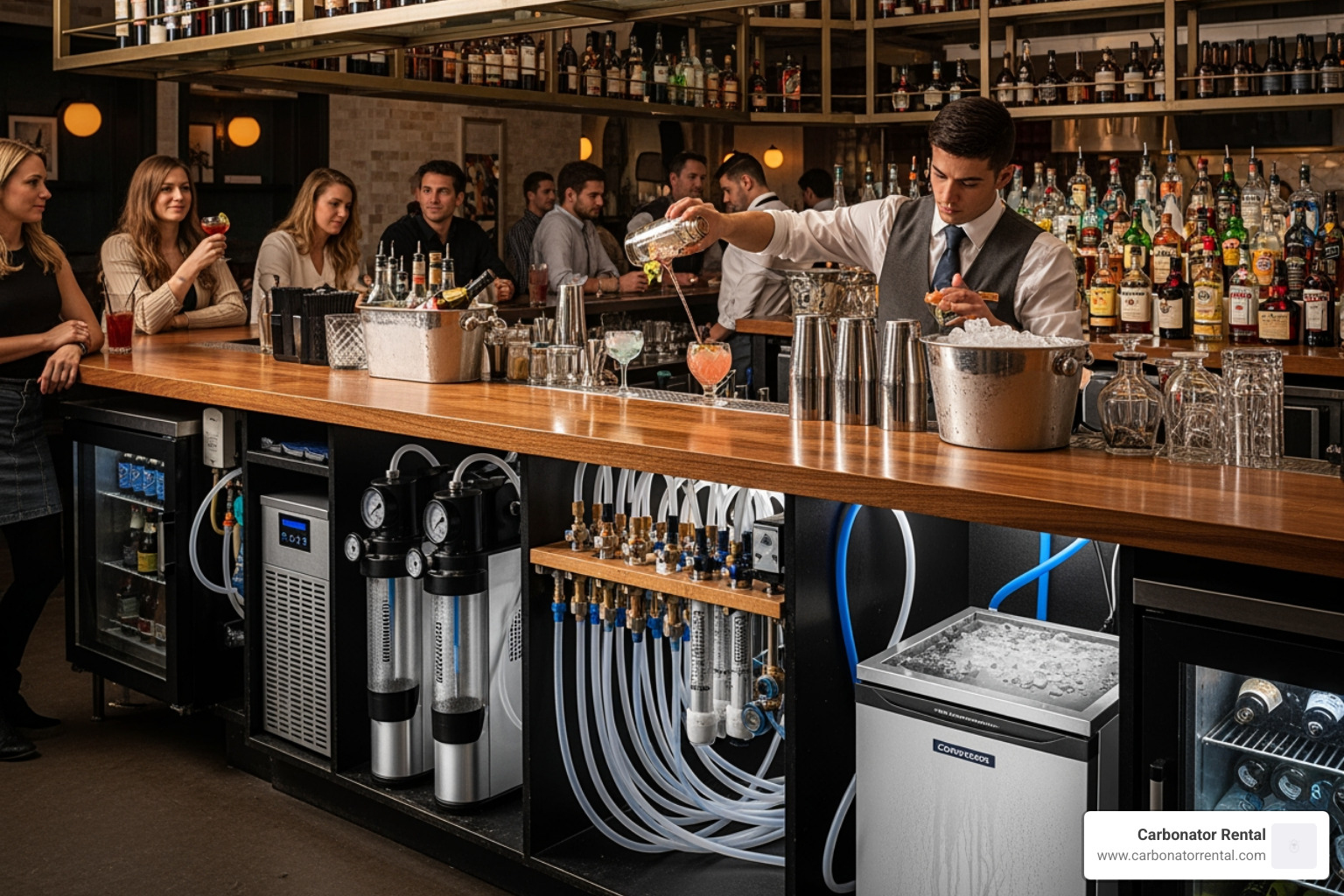
If you are running a bar in Wilmington or a cafe in Cherry Hill, space is money. Every square inch of countertop taken up by a clunky plastic soda maker is space where you could be prepping garnishes or serving customers.
Environmental Impact and Sustainability
The statistics are staggering. A single under sink carbonator can save over 1,000 single-use plastic bottles per year per household—and in a commercial setting, that number can easily triple or quadruple. By switching to a plumbed-in system, you are joining a circular ecosystem. You replace the "delivery, storage, and disposal" cycle of heavy glass or plastic bottles with a permanent, eco-friendly solution.
Long-term Cost Effectiveness of an Under Sink Carbonator
While the initial setup of a professional system is a luxury-tier investment, the ROI is undeniable. Let's look at the numbers:
| Feature | Bottled Sparkling Water | Under Sink Carbonator |
|---|---|---|
| Cost Per Liter | $1.50 - $3.00 | ≤$0.03 |
| Storage Space | Requires multiple cases/shelves | Compact under-sink footprint |
| Labor | Loading, rotating, recycling | On-demand (no labor) |
| Waste | High (plastic/glass) | Zero (plumbed-in) |
By utilizing Bulk CO2 Tanks rather than small, expensive canisters, your operational costs plummet. For a 4-person household, a 60L cylinder might last 4-6 months; for a restaurant, we provide larger Gas Cylinders that ensure you aren't swapping tanks in the middle of a Friday night rush.
We also offer flexible Beverage Equipment Rentals to help businesses in the Newark and Princeton areas avoid high upfront costs while still getting the best gear on the market.
Step-by-Step Installation and Integration Guide
Installing a commercial-grade under sink carbonator isn't quite as simple as plugging in a toaster, but with the right tools, a DIY-savvy manager can handle the basics in about 60 to 90 minutes. However, for a seamless integration that won't leak under high pressure, our Beverage Equipment Installation Services are always the safest bet.
The Installation Process
- Water Line Split: Use a T-valve to split your cold water line. This allows the carbonator to draw water without interfering with your main faucet.
- Filtration First: Before the water hits the carbonator, it should pass through a high-quality filter. We recommend systems like the 3-Stage Under Counter Water Filtration System with Dual Carbon Blocks and NSF Chrome Faucet to ensure the water tastes as good as the bubbles feel.
- Mounting the Hub: Place the carbonation unit (like a SeltzaHub) in the cabinet. Ensure there is adequate ventilation; these units act like mini-fridges and need to breathe to keep the water chilled.
- CO₂ Connection: Connect your Bulk CO2 Tanks to the regulator. For detailed plumbing schematics, you can refer to the SeltzaHub and SeltzaTap Installation Guide.
Integrating with Commercial Filtration and Water Systems
If you already have a Reverse Osmosis (RO) system, you're in luck. About 85% of modern carbonators support RO integration via standard ¼” quick-connect fittings. Systems like the iSpring RCC7P-AK Under Sink 6-Stage Reverse Osmosis Drinking Filtration System with Alkaline Remineralization, and Pump are fantastic because they restore healthy minerals to the water, giving your sparkling water a crisp, "mineral water" finish.
Setting the Correct PSI for Your Under Sink Carbonator
This is where most people trip up. If your pressure is too low (under 60 PSI), your water will be "flat" or have weak, lazy bubbles. If it's too high without the right equipment, you risk blowing a seal.
- Target Pressure: 80-100 PSI.
- Safety First: Ensure your regulator has a safety release valve rated for these higher pressures. Standard beer regulators often max out at 60 PSI and may not be suitable.
Maintenance and Troubleshooting for Your Sparkling Water System
Even the best Beverage Equipment needs a little love to keep "Powering the Perfect Pour." Neglecting maintenance can drop your CO₂ efficiency by 40-60%, meaning you're literally throwing money into the air.
Routine Component Care
- Filter Replacement: Every 6-12 months, depending on your water hardness in Pennsylvania or New Jersey.
- Sanitization: Quarterly sanitization of the tubing prevents biofilm buildup.
- O-Ring Inspection: Check the seals on your CO₂ connections every time you swap a tank. A tiny leak can drain a full 10lb tank in days.
- Faucet Cleaning: Use a dedicated brush to clean the nozzle of your dispenser to prevent sugar or mineral buildup.
If you find yourself overwhelmed, our Beverage Equipment Maintenance Services provide peace of mind. We handle the dirty work so you can focus on your guests.
Common Troubleshooting Issues
1. Low Carbonation (The "Flat" Problem)
- Check the Temp: Is the unit plugged in? If the water isn't chilled to at least 45°F, it won't hold the gas.
- Check the PSI: Ensure the regulator is set between 80-100 PSI.
- Empty Tank: It sounds obvious, but check your CO₂ levels!
2. Sputtering Flow
- This usually indicates air in the lines or a CO₂ tank that is nearly empty. It can also happen if the water pressure from your building is fluctuating. A booster pump (like the one found in high-end RO systems) can fix this.
3. Temperature Fluctuations
- Ensure the under-sink area isn't crowded. If you've stuffed 50 cleaning rags around the carbonator hub, it will overheat and stop chilling.
For bars running complex setups, you might also need to look into Beer Gas Blenders or Nitrogen Generators to ensure all your draft lines—not just the water—are performing perfectly.
Frequently Asked Questions about Under-Sink Carbonation
How long does a CO₂ tank last in a commercial under sink carbonator?
In a standard 4-person household, a 10lb tank typically lasts about 6 months. In a busy commercial environment in Philadelphia or Atlantic City, you might look at 1-2 months per tank. We recommend Bulk CO2 Tanks for high-volume venues to minimize swap frequency.
Can I install an under sink carbonator myself or should I use professional services?
While DIY installation takes about 60-90 minutes with basic tools, commercial venues usually benefit from professional service. We ensure the plumbing meets local codes in PA, NJ, and DE, and we pressure-test every connection to prevent expensive midnight leaks.
Is sparkling water from a tap healthy?
Absolutely. It hydrates just as effectively as still water. By using an under sink carbonator, you also ensure the water is filtered to remove 99% of contaminants like lead and chlorine. Plus, it’s a great way to kick a soda habit—many of our clients report that having "bubbles on tap" helped them and their staff stop drinking sugary soft drinks.
Conclusion: Powering Your Perfect Pour Since 1955
At Carbonator Rental, we’ve spent nearly 70 years helping the hospitality industry in the Philadelphia, Newark, and Wilmington areas deliver the best possible beverages. Whether you are a small cafe in Princeton or a massive restaurant in Cherry Hill, an under sink carbonator is a game-changer for your efficiency and your bottom line.
From providing the Gas Cylinders that fuel your fizz to offering full-service Beverage Equipment Installation Services, we are here to support your business. Don't settle for "okay" bubbles when you can have the perfect, sharp, refreshing sparkle that keeps customers coming back.
Ready to upgrade your bar? Let us help you get bubbly. Contact Carbonator Rental today to discuss our flexible rental options and local support.
