

Why Regular Maintenance Protects Your Kitchen Investment
Catering equipment maintenance is the systematic care of commercial kitchen appliances through cleaning, inspections, and servicing to prevent breakdowns, extend equipment lifespan, and ensure safety compliance.
Quick Answer: Essential Maintenance Actions
| Frequency | Key Tasks |
|---|---|
| Daily | Clean surfaces, check temperatures, inspect connections |
| Weekly | Clean grease filters, descale beverage lines |
| Monthly | Deep clean coils, inspect seals and gaskets |
| Twice Yearly | Professional servicing by certified engineers |
If you run a commercial kitchen, you know how frustrating unexpected equipment breakdowns can be. A walk-in cooler fails during dinner service. An oven suddenly won't hold temperature. A soda fountain stops dispensing mid-rush. These aren't just inconveniences—they're revenue killers.
Poor maintenance is a major underlying cause of accidents in catering. Beyond safety risks, neglected equipment costs you money in three ways: emergency repairs that can run thousands of dollars, spoiled inventory that has to be thrown out, and lost revenue when you can't serve customers.
The good news? Regular maintenance can make equipment last up to 50% longer and cut repair costs in half. With proper care, commercial kitchen equipment can reliably serve you for 7-10 years or more.
This guide walks you through everything you need to know about maintaining your catering equipment—from daily cleaning routines to professional servicing schedules. You'll learn which tasks your staff can handle and when to call certified technicians. We'll cover refrigeration units, cooking equipment, beverage systems, and the legal requirements you must follow in the UK.
Whether you're opening a new restaurant or managing an established operation, the maintenance strategies in this article will help you avoid costly breakdowns, reduce energy bills, and keep your kitchen running smoothly.
Why Catering Equipment Maintenance is Essential for Success
In the high-pressure world of professional cooking, your equipment is your lifeline. Whether you are running a busy bistro in Philadelphia or a high-volume bar in Atlantic City, the reliability of your gear determines your success. Regular catering equipment maintenance isn't just a chore; it’s a strategic investment in your business's future.
When equipment is well-maintained, it operates at peak efficiency. For example, a refrigerator with clean condenser coils doesn't have to work as hard to keep food cold. This reduces the strain on the motor, leading to a significant increase in the equipment's lifespan. Research shows that proactive care can help your assets last up to 50% longer than those left to fend for themselves.
Safety is another non-negotiable factor. According to the Maintenance priorities in catering - HSE, poor standards of maintenance are a primary cause of workplace accidents. These include slips from leaking appliances, exposure to harmful substances, electrical injuries, and even catastrophic fires or explosions. By prioritizing maintenance, you create a safer environment for your team and your guests.
The Financial Impact of Neglect
The "if it ain't broke, don't fix it" mentality is a dangerous trap in the catering industry. Reactive maintenance—waiting for something to fail before calling for help—is almost always more expensive than a planned approach.
Consider the "hidden" costs of a breakdown:
- Emergency Call-Out Fees: Technicians charge a premium for Sunday night emergencies.
- Stock Spoilage: A failed walk-in can lead to thousands of dollars in wasted proteins and produce.
- Lost Revenue: If your ovens are down, your menu is limited, and customers will go elsewhere.
- Energy Inefficiency: Dirty or poorly calibrated equipment consumes significantly more electricity and gas.
By contrast, a solid maintenance plan can cut your repair costs by half. For those managing complex drink menus, keeping an eye on your beverage equipment ensures you never miss a high-margin sale due to a technical glitch.
| Cost Factor | Preventative Maintenance (PPM) | Reactive Maintenance (Breakdown) |
|---|---|---|
| Service Fee | Scheduled, predictable rates | High emergency call-out rates |
| Parts | Replaced before failure | Often requires overnight shipping |
| Downtime | Minimal (scheduled off-hours) | Unpredictable and costly |
| Equipment Life | Extended (7-10+ years) | Shortened significantly |
Troubleshooting Common Catering Equipment Maintenance Issues
Even with the best care, issues can arise. Knowing how to spot the early warning signs can save you from a total shutdown. Here are the most common problems we see in the field:
- Power Supply Issues: Often, "broken" equipment is simply a tripped breaker or a loose plug. Always check the power source first.
- Thermostat Failure: If an oven is burning food or a fridge is sweating, the thermostat may be out of calibration.
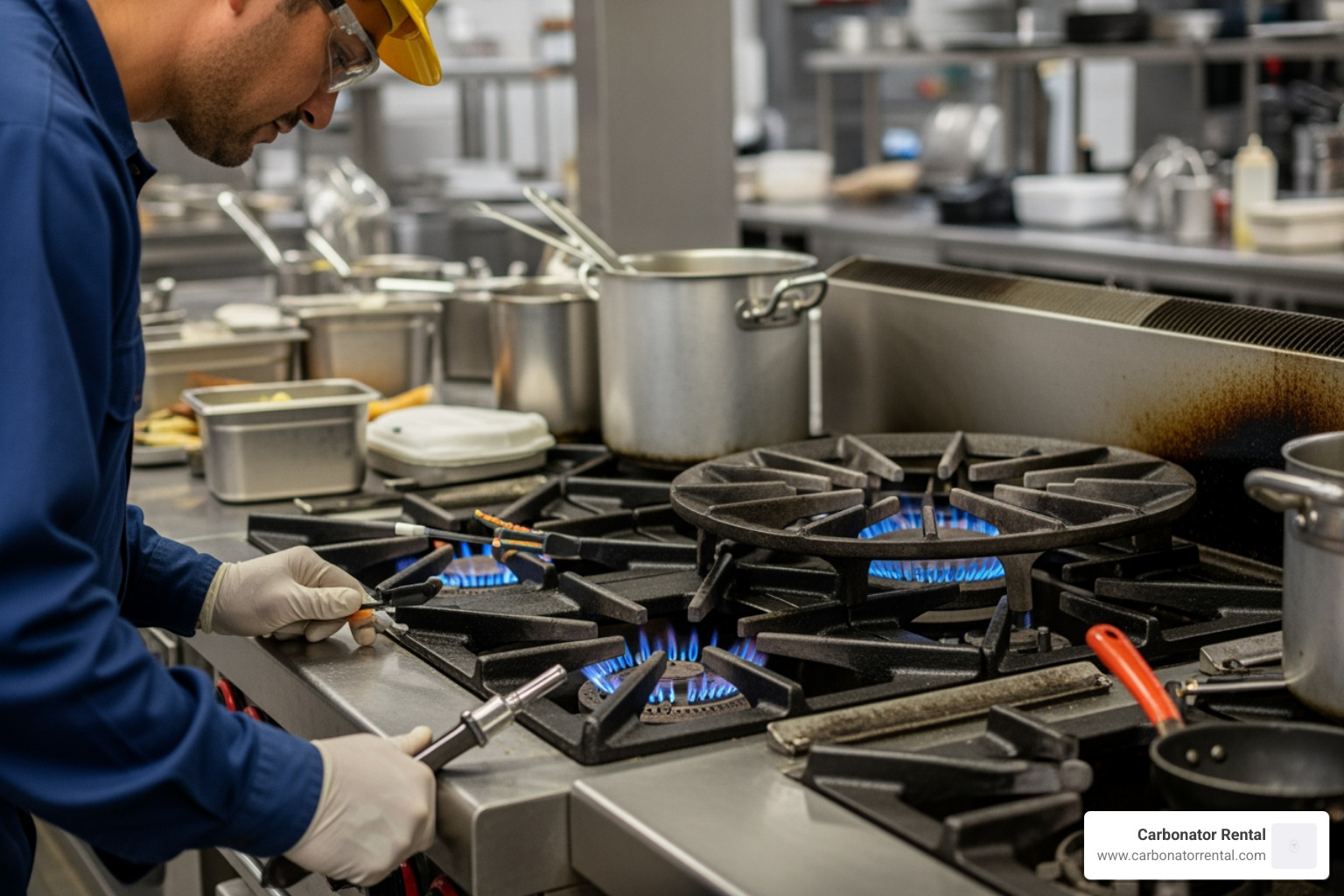
- Gas Blockages: Grease and food debris can clog burners, leading to uneven heating or pilot light issues.
- Scale Buildup: In areas like Princeton or Wilmington where water hardness varies, lime and scale can choke dishwashers and ice machines.
Implementing a Planned Preventative Maintenance (PPM) Strategy
A Planned Preventative Maintenance (PPM) strategy is the "Chef's Secret" to a stress-free kitchen. Instead of reacting to crises, you schedule regular check-ups to ensure everything is humming. This approach allows for predictable budgeting; you know exactly when your service costs will hit, rather than being blindsided by a $2,000 repair bill during your busiest month.
Most experts recommend that commercial kitchen equipment be professionally serviced at least twice a year. Some high-use items, like deep fat fryers or heavy-duty refrigeration, may even benefit from quarterly inspections. Following an Essential Guide to Catering Equipment Maintenance helps you stay organized and ensures no piece of gear is overlooked.
The Role of Staff Training in Catering Equipment Maintenance
Your staff are your first line of defense. They interact with the equipment every day and are the most likely to notice a strange noise, a weird smell, or a drop in performance. Training your team on correct usage is vital. Many equipment failures are actually caused by "user error"—slamming doors, using the wrong cleaning chemicals, or overloading refrigeration units.
Training should cover:
- Daily Cleaning Protocols: How to properly break down and sanitize equipment.
- Early Detection: Teaching staff what "normal" looks and sounds like.
- Safety Procedures: What to do (and what NOT to do) when a machine malfunctions.
When your team understands the value of the tools they use, they take better care of them. For businesses adding new capabilities, investing in beverage equipment installation services often includes a training component to get your staff up to speed on the new tech.
Professional vs. In-House Care
While your staff can handle the daily scrubbing, they shouldn't be taking apart gas valves or rewiring control boards. There is a clear line between routine cleaning and technical servicing.
- In-House: Daily wiping, weekly filter cleaning, and visual inspections.
- Professional: Internal component cleaning, calibration, gas pressure testing, and electrical safety checks.
In the UK, gas-powered catering equipment must be serviced by a Gas Safe registered engineer. In our local service area—including Philadelphia, Newark, and Wilmington—you should always ensure your technicians are fully certified and insured. Professional services play a crucial role in maintaining compliance and protecting your manufacturer warranties.
Daily, Weekly, and Monthly Maintenance Checklists
Consistency is the key to longevity. A checklist ensures that even on the busiest nights, the essential tasks get done.
Daily Essential Routines
Every shift should end with a "reset" of your equipment. This prevents grease and food particles from hardening, which makes them much harder to remove later.
- Surface Wiping: Use food-grade cleaners on all stainless steel. Always wipe in the direction of the grain to prevent scratches.
- Temperature Logging: Check and record the temperatures of all refrigerators and freezers at least twice daily. This is vital for food safety and helps spot failing compressors early.
- Seal Inspection: Quickly check that door gaskets are clean and forming a tight seal.
- Beverage Check: Ensure your beverage dispensing equipment is wiped down and nozzles are cleared of any syrup buildup.
Weekly and Monthly Deep Cleaning
Some tasks require a bit more time and elbow grease. These should be scheduled during slower periods.
- Weekly:
- Clean grease filters in ventilation hoods to prevent fire hazards.
- Descale coffee machines and tea brewers.
- Sanitize ice machine bins.
- Monthly:
- Vacuum refrigerator condenser coils (dust acts as an insulator, forcing the motor to work harder).
- Deep clean oven interiors and check door hinges.
- Inspect and clean air filters on all specialized equipment.
Essential Cleaning Tools:
- Soft microfibre cloths (for stainless steel).
- Non-corrosive, food-safe degreasers.
- Nylon-bristled brushes (for scrubbing burners).
- Vacuum with a brush attachment (for coils).
- Handheld mirrors (to see into tight equipment corners).
Best Practices for High-Performance Kitchen Assets
Different types of equipment have unique needs. To get the best ROI, you need to tailor your approach to each asset category.
Maintaining Beverage and Ice Systems
Beverage systems are often the most profitable part of a menu, but they are also sensitive. Scale buildup in ice machines can ruin the flavor of a drink and eventually cause the machine to seize.
For those using beverage equipment rentals, maintenance is often part of the package. However, you should still:
- Change water filters: Every six months, or more often if you have hard water.
- Clean lines: Soda and beer lines should be professionally cleaned to prevent "off" flavors and bacterial growth.
- Monitor CO2: Ensure your gas systems are secure and not leaking, which is both a safety hazard and a waste of money.
Refrigeration and Cooking Equipment
Refrigeration is about airflow. If air can't move, the food won't stay cold. Keep items away from the internal fans and ensure the external vents aren't blocked by boxes or clutter.
For cooking equipment like fryers and ovens, grease is the enemy. Carbonized grease on heating elements acts as an insulator, making the equipment take longer to reach temperature. Regularly calibrating your burners ensures that "Medium-High" actually means Medium-High, maintaining the consistency of your dishes.
Legal Compliance and Safety Standards in the UK
While Carbonator Rental serves the Mid-Atlantic US, many of our clients follow international best practices, including those set in the UK. Adhering to high standards like the Maintenance priorities in catering - HSE ensures a world-class safety profile.
Key compliance areas include:
- EICR Tests: Regular electrical installation condition reports to prevent shocks and fires.
- Gas Safety: Annual inspections of all gas connections and appliances.
- Fire Safety: Regular cleaning of ductwork and extraction systems (often required by insurance providers).
- Documentation: Keeping a "Paper Trail" or digital log of all maintenance. This is essential for health inspections and can protect you in the event of an insurance claim.
Frequently Asked Questions about Catering Equipment Maintenance
How often should commercial equipment be serviced?
At a minimum, you should have a professional service twice a year. High-volume kitchens or those in areas with very hard water may require quarterly visits for specific items like ice machines and dishwashers.
Can regular maintenance reduce energy bills?
Absolutely. Clean coils, calibrated burners, and tight door seals ensure your equipment doesn't waste energy. Some businesses see a 10-20% drop in utility costs after implementing a strict maintenance schedule.
What should I do during an equipment breakdown?
- Check for Safety: If there is a smell of gas or smoke, evacuate and call emergency services.
- Disconnect: If safe, turn off the power or gas to the unit.
- Signage: Place a "Do Not Use" sign on the equipment so staff don't aggravate the problem.
- Call a Professional: Contact your service provider immediately. Do not attempt complex repairs yourself, as this can void your warranty.
Conclusion
At Carbonator Rental, we know that a successful kitchen is built on a foundation of reliable equipment. Since 1955, we have been "Powering the Perfect Pour," providing bars and restaurants across Philadelphia, New Jersey, and Delaware with the tools they need to thrive.
We don't just deliver syrups and gas; we provide a partnership. Our beverage equipment maintenance services are designed to take the stress out of your operation. From emergency repairs to scheduled CO2 and syrup deliveries, we are here to ensure your business never misses a beat.
Don't wait for a breakdown to realize the value of your equipment. Start your maintenance journey today, and keep your kitchen—and your profits—running at peak performance. Trust our family-run team to provide the local, dependable support your business deserves.
