

Why Knowing How to Change Bag in Box Soda Matters for Your Business
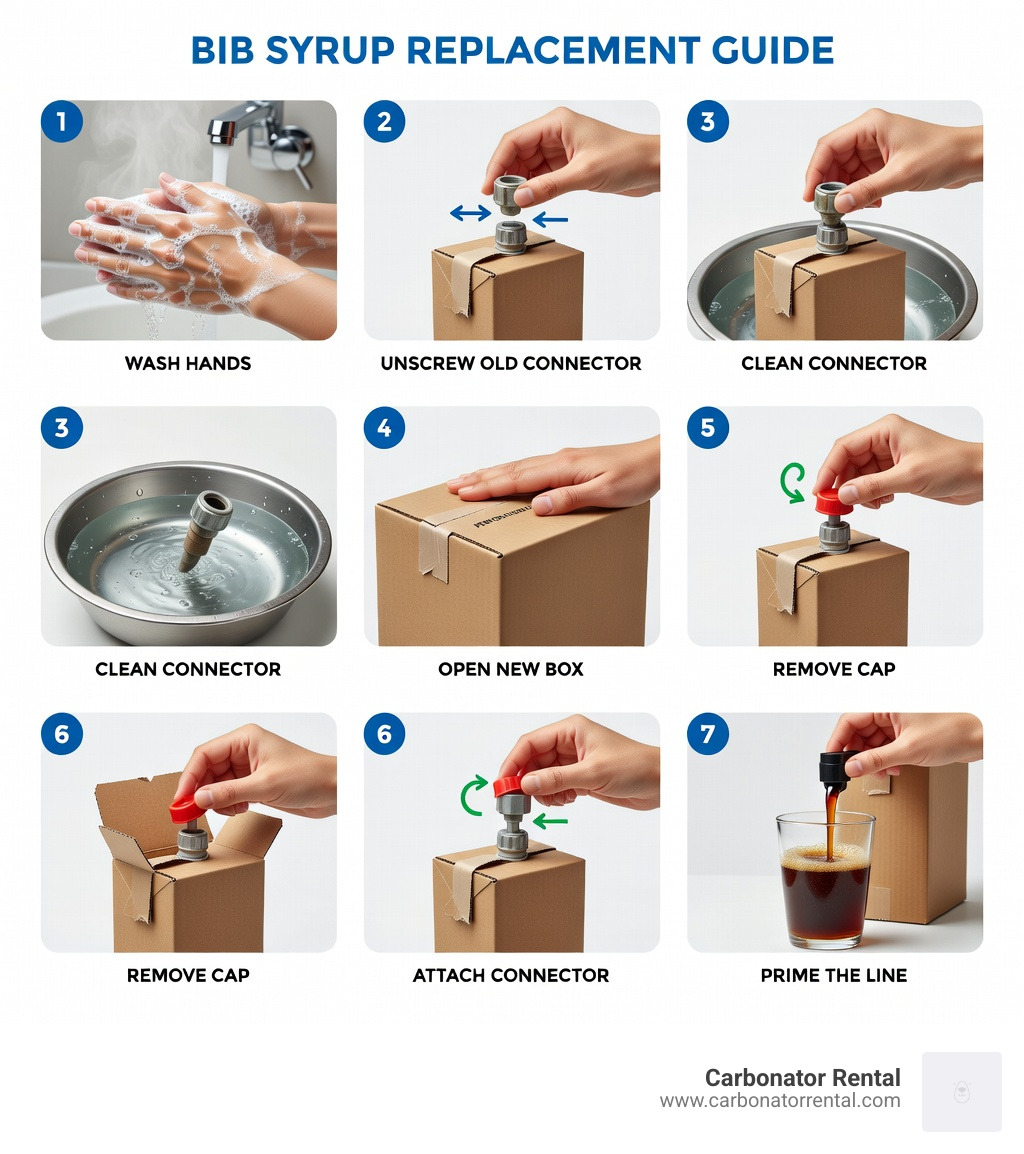
How to change bag in box soda is a fundamental skill for any restaurant, bar, or café manager who wants to keep beverages flowing without costly downtime. Here's the quick process:
- Wash your hands thoroughly with soap and water
- Unscrew the connector from the empty box (turn counter-clockwise)
- Clean the connector in warm water for 10-15 seconds, then dry
- Open the new box at perforations A and B using your palm (no sharp tools)
- Remove the protective cap from the nozzle
- Attach the connector by turning clockwise until hand-tight
- Operate the dispensing valve to restore syrup flow
When your soda gun starts sputtering or dispensing clear liquid instead of syrup, you're looking at an empty bag-in-box (BIB). These durable rectangular containers hold 5 gallons of concentrated syrup that mix with water at a 5:1 ratio to produce approximately 30 gallons of finished soda.
For commercial operations, knowing how to change these bags quickly and correctly means the difference between a minor interruption and frustrated customers waiting for their drinks. The process takes less than five minutes once you know the steps, but doing it wrong can lead to flavor contamination, leaks, or equipment damage.
One critical rule: Replace only one BIB at a time to avoid mixing up flavors. Each syrup line should stay dedicated to its specific flavor because the tubing absorbs taste over time.
Most BIB changes happen during busy service periods when you can least afford problems. That's why proper technique matters—and why having reliable equipment support makes all the difference.
Preparation and Safety Protocols
Before you dive into the back room to swap out a syrup box, preparation is key. In the environment of a Philadelphia bar or a busy Newark restaurant, it’s easy to rush, but following a few safety and hygiene protocols ensures your Beverage Dispensing Equipment stays in top shape and your drinks remain sanitary.
First and foremost: Wash your hands. You are handling food-grade equipment that connects directly to the beverages your customers consume. Use soap and warm water for at least 20 seconds.
Next, gather your supplies. You don’t need a toolbox, but you should have:
- A bucket or bowl of clean, warm water.
- An approved sanitizer solution (if required by your health protocol).
- A clean, lint-free cloth.
Crucial Safety Warning: Never use sharp tools like knives, box cutters, or scissors to open the BIB. These boxes are designed with perforated cardboard tabs for a reason. Using a blade risks puncturing the internal plastic bag, leading to a sticky, expensive mess that no one wants to clean up during a Friday night rush.
Identifying When to Change Bag in Box Soda
How do you know it's time? Usually, the machine tells you before you even look at the box. According to How to Change Cola or Juice Syrup Boxes, the most common sign is a "sputtering" sound at the soda gun or fountain head. This happens because the pump is pulling air along with the last bits of syrup.
Other signs include:
- Clear or "Pale" Soda: If your cola looks like seltzer, the syrup is gone.
- Flavor Loss: The drink tastes "thin" or overly carbonated.
- Bag Weight: If you lift the box and it feels light or "hollow," it’s empty.
- Pump Cycling: You might hear the syrup pump in the back room running continuously or making rapid clicking noises as it tries to prime a line that has no liquid.
Pro-Tips for How to Change Bag in Box Soda Safely
When you're ready to open the new box, use palm pressure. Find the perforated circle (usually marked 'A') and press it sharply with the heel of your hand. Once pushed in, you can reach in and pull the nozzle up through the opening.
Another pro-tip from How To Change a Bag-In-Box - YouTube is to always hand-tighten only. The connectors are made of heavy-duty plastic, and using pliers or a wrench will almost certainly crack the housing or strip the threads. If it’s not sealing with hand-tightening, check for cross-threading. If the connector goes on crooked, it will leak air into the line, causing the pump to run non-stop and resulting in flat soda.
Step-by-Step: How to Change Bag in Box Soda
Now let's walk through the full physical process. Whether you are in Atlantic City or Princeton, the equipment usually follows the same standard design.
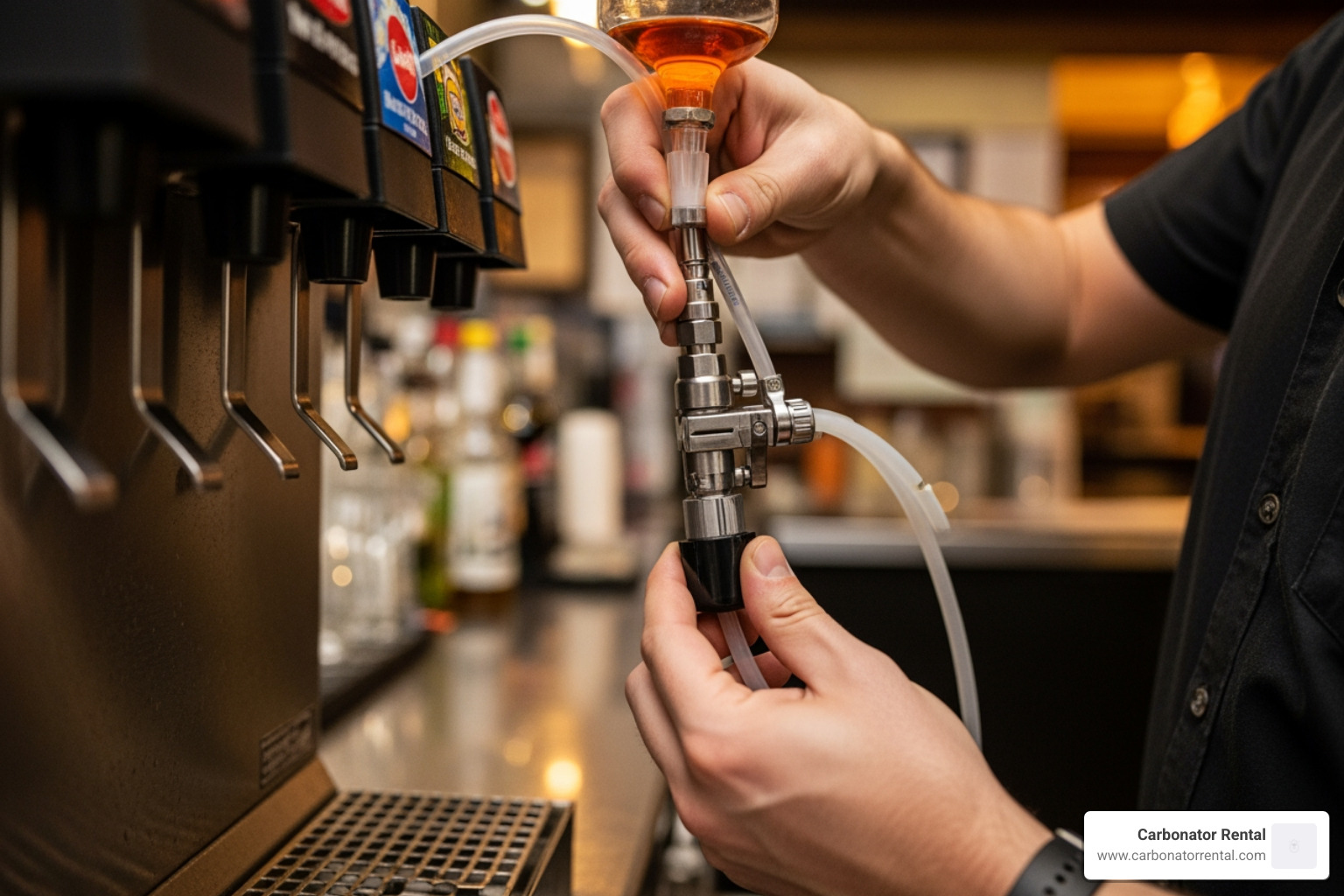
- Disconnect the Old Bag: Locate the empty BIB. Turn the connector counter-clockwise. You might hear a small "hiss" of CO2; this is normal as the pressure is released. Pull the connector away from the bag nozzle.
- The 15-Second Rinse: This is the step most people skip, but it's the most important for hygiene. Agitate the connector in a bucket of warm water for 10-15 seconds. This removes any dried, sticky syrup that could harbor bacteria or prevent a tight seal on the new bag. If you have an approved sanitizer, soak it for one minute as per Coca-Cola’s official troubleshooting guidelines.
- Prepare the New Box: Place the new BIB of the same flavor in the rack. Open the perforated flap and pull the nozzle out.
- Remove the Dust Cap: Every new bag comes with a plastic dust cap to keep the nozzle sanitary. Pull this off and discard it.
- Secure the Connection: Line up the connector with the nozzle. Turn it clockwise. Make sure it feels smooth as it turns. If you feel resistance immediately, back it off and try again to avoid cross-threading. Tighten until it is snug.
- Prime the Line: Go back to your soda gun or fountain. Run the drink for about 10-15 seconds. You will hear the pump "burp" as it pushes the air out and pulls the fresh syrup through the lines. Once the color is consistent and the sputtering stops, you’re back in business.
Ensuring Flavor Consistency
One of the biggest mistakes in high-volume environments is flavor contamination. Syrup lines are made of food-grade tubing, but over years of use, they can absorb the "essence" of a flavor. This is why we recommend Wholesale Bag-in-Box Syrup Distribution partners who help you maintain dedicated lines.
Never hook a Ginger Ale bag up to a Cola line. Even if you flush the line, the next 50 Colas might have a faint hint of ginger. Always verify the label on the box matches the label on the line before you screw that connector on. If you are changing multiple boxes, do them one-at-a-time. It’s the simplest way to ensure you don't cross the lines.
Troubleshooting Common BIB Issues
Even if you know how to change bag in box soda perfectly, equipment can sometimes be finicky. If you’ve changed the bag and the drink still isn't right, here is what to look for:
- No Flow: Check the CO2 tank. Syrup pumps are powered by gas. If your CO2 is empty, the pump won't move the syrup from the box to the gun.
- Continuous Pump Cycling: If you hear the pump clicking but no one is pouring a drink, you have a leak. Usually, this is an air leak at the connector. Check if it's tight or if the O-ring inside the connector is missing.
- Frozen Cold Plates: If you are in a high-volume bar and the soda comes out looking "slushy" or stops flowing entirely, your cold plate might be frozen. This usually happens if the water flow is restricted but the cooling system is overactive.
- Cloudy Drinks: This can be caused by air in the lines or issues with the carbonator.
For persistent issues, our Beverage Equipment Maintenance Services are available to help businesses throughout the Philadelphia and Delaware Valley areas. Sometimes a pump diaphragm fails or a line gets a pinhole leak that requires a professional touch.
Calibrating the Perfect Pour
The industry standard for most sodas is a 5:1 ratio (five parts carbonated water to one part syrup).
- A standard 5-gallon BIB yields roughly 30 gallons of finished product.
- A 2.5-gallon BIB yields 15 gallons.
If the drink tastes too sweet or too weak, your "Brix" (the ratio) might be off. This is calibrated at the dispenser head. While you can do basic checks, we recommend having a technician calibrate your system periodically to ensure you aren't wasting expensive syrup or serving a sub-par product.
The gas matters too. A standard 20 lb CO2 tank typically lasts through about three 5-gallon BIBs. If you’re changing your third box of the month, it’s time to check your gas levels!
Frequently Asked Questions about BIB Systems
How many drinks does one 5-gallon BIB produce?
A 5-gallon bag-in-box syrup produces approximately 30 gallons of finished soda. If you are serving 12 oz drinks (allowing for ice), you can expect to get about 320 to 350 servings per box. This high yield is why BIB systems are significantly more cost-effective and space-saving than cans or bottles.
How long does a 20 lb CO2 tank last?
In a commercial setting, a 20 lb tank typically lasts for about 15 to 20 five-gallon boxes of syrup, though this depends on how carbonated your drinks are and if you have any minor leaks in the system. For household or low-volume use, a tank might last 4 to 6 months.
Can I use different syrup brands on the same machine?
Yes, but you may need different BIB connectors. Coca-Cola, Pepsi, and generic brands often use slightly different nozzle designs (like the "Encore" vs. "QCD" connectors). If you’re switching brands, make sure you have the right adapter. Carbonator Rental can provide the necessary Beverage Equipment to ensure compatibility across all major syrup brands.
Conclusion
Mastering how to change bag in box soda is more than just a chores—it's about protecting your bottom line and ensuring every guest gets a perfect pour. From the initial hand-wash to the final priming of the line, these steps ensure your equipment stays sanitary and your flavors stay true.
At Carbonator Rental, we’ve been "Powering the Perfect Pour Since 1955." Based in Philadelphia and serving Newark, Atlantic City, Wilmington, and the surrounding regions, we provide the full-service support that bars and restaurants need to thrive. Whether you need Bag-in-Box Syrup delivery, a new soda gun installation, or emergency Saturday service to fix a carbonation crisis, our family-run team is ready to help.
Don't let a "flat" beverage deflate your profits. Keep your system maintained, your staff trained, and your supplies stocked. If you run into a problem you can't solve with a simple bag change, give us a call—we'll get the fizz flowing again in no time.
