

Why the Right Soda Machine for Business Changes Everything
Finding the best soda machine for business depends on your service volume and layout. Since 1955, Carbonator Rental has been "Powering the Perfect Pour" for Philadelphia and the surrounding Tri-State area.
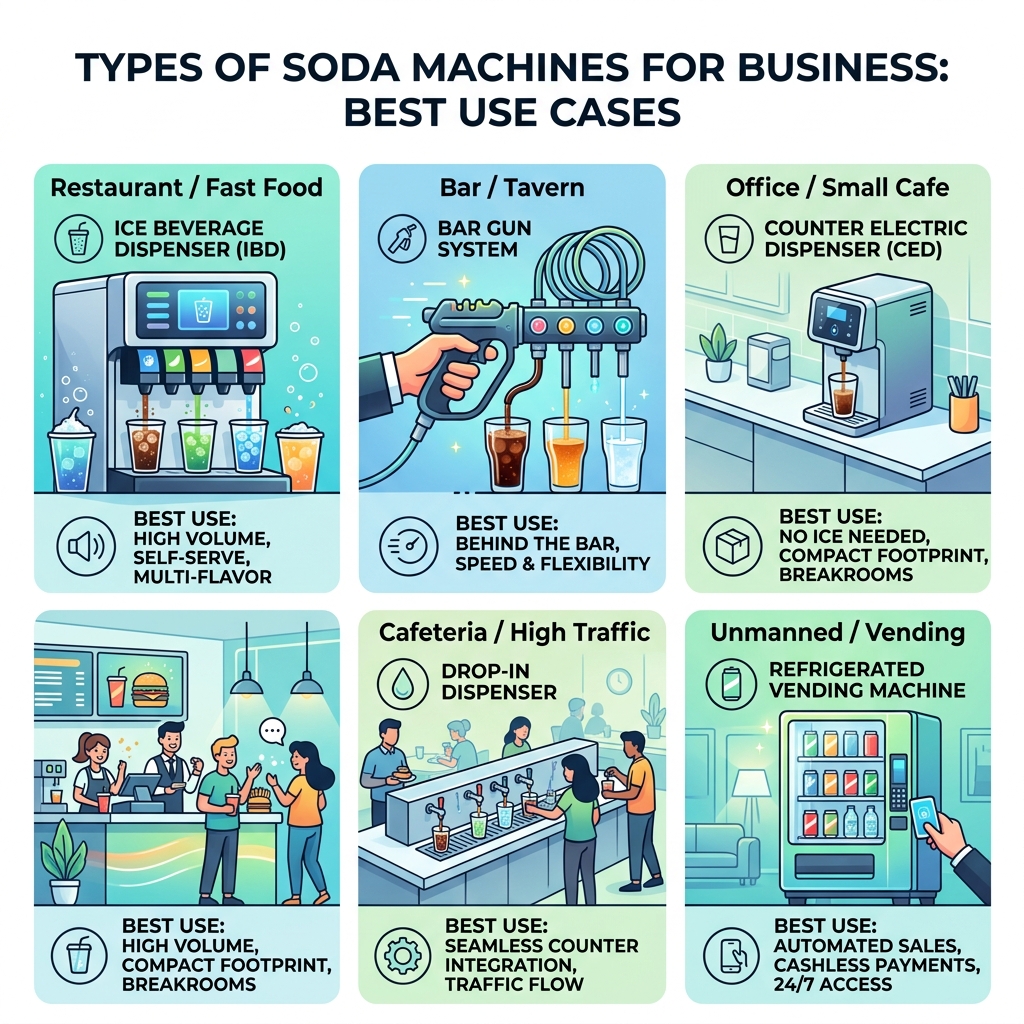
| Business Type | Best Machine Type | Key Benefit |
|---|---|---|
| Restaurant / Fast Food | Ice Beverage Dispenser (IBD) | High volume, self-serve |
| Bar / Tavern | Bar Gun System | Speed, flexibility behind the bar |
| Office / Small Cafe | Counter Electric Dispenser (CED) | Compact, no ice needed |
| Cafeteria / High Traffic | Drop-In Dispenser | Seamless counter integration |
| Unmanned / Vending | Refrigerated Vending Machine | Automated, cashless payments |
Flat soda drives customers away and hurts your bottom line. Modern commercial systems are highly efficient; a single 5-gallon bag-in-box (BIB) syrup produces 30 gallons of finished soda, making fountain drinks one of the highest-margin items on your menu. This guide explores the top options to help you maximize profitability.
Exploring the Best Soda Machine for Business Options
A soda machine for business is not a one-size-fits-all appliance. In our experience serving the Delaware Valley, the wrong footprint can bottleneck your kitchen, slow down bartenders, or create unnecessary back-of-house clutter. The right system should match your traffic, menu, and floor plan while supporting reliable service during your busiest hours.
Ice Beverage Dispensers (IBD)
These are the heavy hitters found in fast-food chains, stadium counters, and busy cafeterias. They combine massive ice storage, often 175 lbs to 360 lbs, with multiple dispensing valves for self-serve or staff-assisted use. Because ice is stored directly above the cold plate, drinks stay frosty during lunch rushes, school breaks, and event surges. For operators focused on speed and volume, IBDs help reduce wait times and keep lines moving.
Counter Electric Dispensers (CED)
Ideal for offices in Princeton or small cafes in Cherry Hill, CEDs use internal mechanical refrigeration to chill water and syrup lines without depending on a separate ice bin. They are compact, easy to place on existing counters, and a smart fit for locations with lighter volume or limited space. They also work well for break rooms, grab-and-go concepts, and smaller hospitality settings that still want fountain quality.
Drop-In Units
For a professional look, drop-in dispensers are installed directly into your countertop. The ice bin sits below the counter, leaving only the valves visible, which creates a cleaner and more custom appearance. This is a strong choice for high-end bars, food halls, and modern fast-casual spots where appearance matters as much as function. A well-planned drop-in setup can improve workflow while preserving valuable counter space.
Bar Guns
In taverns, nightclubs, and full-service bars, the bar gun is king. A flexible hose allows staff to dispense up to 10 different products from a single handheld valve, saving steps and helping bartenders build drinks faster. These systems rely on a remote chiller to keep lines cold and are especially useful when speed, flexibility, and limited bar space all matter at once.
Why Matching the Machine Matters
Choosing correctly is about more than equipment style. It affects:
- Pour speed during peak periods
- Available flavor variety
- Counter and back-room space usage
- Cleaning and maintenance routines
- Long-term operating costs
Contact Carbonator Rental for commercial soda fountain systems and accessories
Key Factors When Choosing a Soda Machine for Business
Selecting a machine requires looking at the cooling technology and capacity needs of your specific venue.
Cooling Technology: Ice-Cooled vs. Electric
- Ice-Cooled: These use a "cold plate"—a heavy aluminum block with stainless steel tubes. Packing ice on the plate pulls heat from the soda. It is reliable and requires no extra electricity for cooling.
- Electric-Cooled: These use a compressor and refrigerant. They are "set it and forget it" units, though they have more moving parts and add to your utility bill.
Capacity and Flavor Variety
High-volume venues need valves with flow rates up to 4.5 oz per second. While a small bistro might only need 4 flavors, a stadium or large cafeteria in Wilmington may require 8 to 12 valves to offer a full range of colas, diet options, and sparkling waters. Always ensure your equipment meets the standards set by the National Sanitation Foundation (NSF) for food safety.
Footprint and Space
Measure your space carefully. A standard drop-in unit requires a 23.25" square cutout, while a slim vending machine might stand 72 inches tall. Don't forget to map out your "syrup room" for CO2 tanks and BIB racks.
Installation and Maintenance Requirements
Setting up a soda machine for business is a technical process that requires professional expertise to ensure longevity, drink quality, and day-to-day reliability. A fountain system may look simple from the customer side, but behind the counter it depends on precise water pressure, clean syrup delivery, proper carbonation, and safe electrical connections.
The Four Pillars of Setup
- Water Source: You need a dedicated line with consistent pressure and a high-quality filter. In areas like Newark, water mineral content varies; filtration prevents scale buildup, protects internal components, and ensures a clean taste.
- CO2 Supply: This provides the fizz. You will need food-grade CO2 tanks and high-pressure regulators sized for your volume. We specialize in dependable CO2 delivery to prevent flat drinks and interrupted service.
- Electricity: Most dispensers run on 115V or 120V power, but carbonators, drain pumps, and refrigeration units often need dedicated outlets. Confirming power requirements early helps avoid installation delays.
- Syrup Supply: Modern systems use Bag-in-Box (BIB) technology. Pumps use CO2 pressure to pull syrup from the box to the dispenser, helping operators save storage space while simplifying product changes.
What Professional Installation Prevents
A proper install helps avoid common issues such as:
- Inconsistent carbonation
- Incorrect syrup ratios
- Leaking fittings or lines
- Warm product caused by poor cooling setup
- Drainage issues around ice bins and drip trays
Maintenance: The Secret to Longevity
Routine care protects your investment and keeps drinks tasting the way customers expect.
- Daily: Soak dispensing nozzles in sanitizer, wipe down drip trays, and inspect the station for buildup.
- Monthly: Check your brix ratio, the balance of syrup to water. Most systems use a 5:1 ratio to ensure the proper taste and margin.
- Quarterly or as needed: Inspect pumps, regulators, water filters, and syrup connections for wear.
- Annually: Have a professional technician from Carbonator Rental inspect the carbonator, verify performance, and check for CO2 leaks.
For busy restaurants, bars, and cafes, ongoing service matters just as much as the initial install. Scheduled maintenance, local delivery of syrup and gas, and fast emergency support help keep your beverage program profitable and dependable.
Maximizing Profitability with Full-Service Support
The economics of a soda machine for business are compelling. While a can of soda has a high wholesale cost, a fountain drink costs only pennies per pour.
Why Rental Makes Sense
Buying a system outright can cost over $6,000. For businesses in Pennsylvania, New Jersey, and Delaware, our rental programs offer:
- Low Upfront Costs: Preserve your capital for other operational needs.
- Included Maintenance: We handle all repairs, from leaking valves to pump failures.
- Emergency Support: If your system goes down on a Friday night in Atlantic City, our local team provides the fast support national brands can't match.
The Power of Local Support
Since 1955, our family-run business has focused on personal service. We don't just provide a machine; we provide the food-grade gas, BIB syrups, and technical expertise to keep your "perfect pour" consistent. Whether you need a nitrogen generator for craft beer or a 10-valve tower for a restaurant, we are your one-stop shop.
Frequently Asked Questions about Business Soda Machines
What is the most cost-effective way to serve soda?
Fountain systems are the undisputed champion. By using BIB syrup, you eliminate the waste of half-used bottles and save significant storage space. Offering free refills is also a proven way to increase customer satisfaction without hurting margins.
Do I need a floor drain for my soda machine?
Yes, in most cases. Ice-cooled machines produce meltwater, and all dispensers have drip trays. If a floor drain isn't nearby, we can install an external electric drain pump to move water to the nearest plumbing line.
How often should I change my CO2 tank?
A 20 lb CO2 tank typically lasts through 10 to 12 five-gallon syrup boxes. We recommend checking your regulators every morning to avoid serving flat drinks during a rush.
What certifications should I look for?
Always ensure your equipment is NSF and UL (Underwriters Laboratories) certified. This ensures the machine meets strict food safety and electrical standards. For utility savings, look for ENERGY STAR rated refrigeration units.
Conclusion
Investing in a soda machine for business is a strategic move to increase profitability. From compact units for a Princeton office to high-speed bar guns for a Philadelphia tavern, Carbonator Rental has the expertise to help you succeed.
We take the "flatness" out of the equation with reliable equipment, local syrup delivery, and 24/7 emergency support across PA, NJ, and DE. Don't let your profits go flat—partner with the experts who have been powering the perfect pour since 1955.
