

Why Soda Machine Troubleshooting Saves Your Business Time and Money
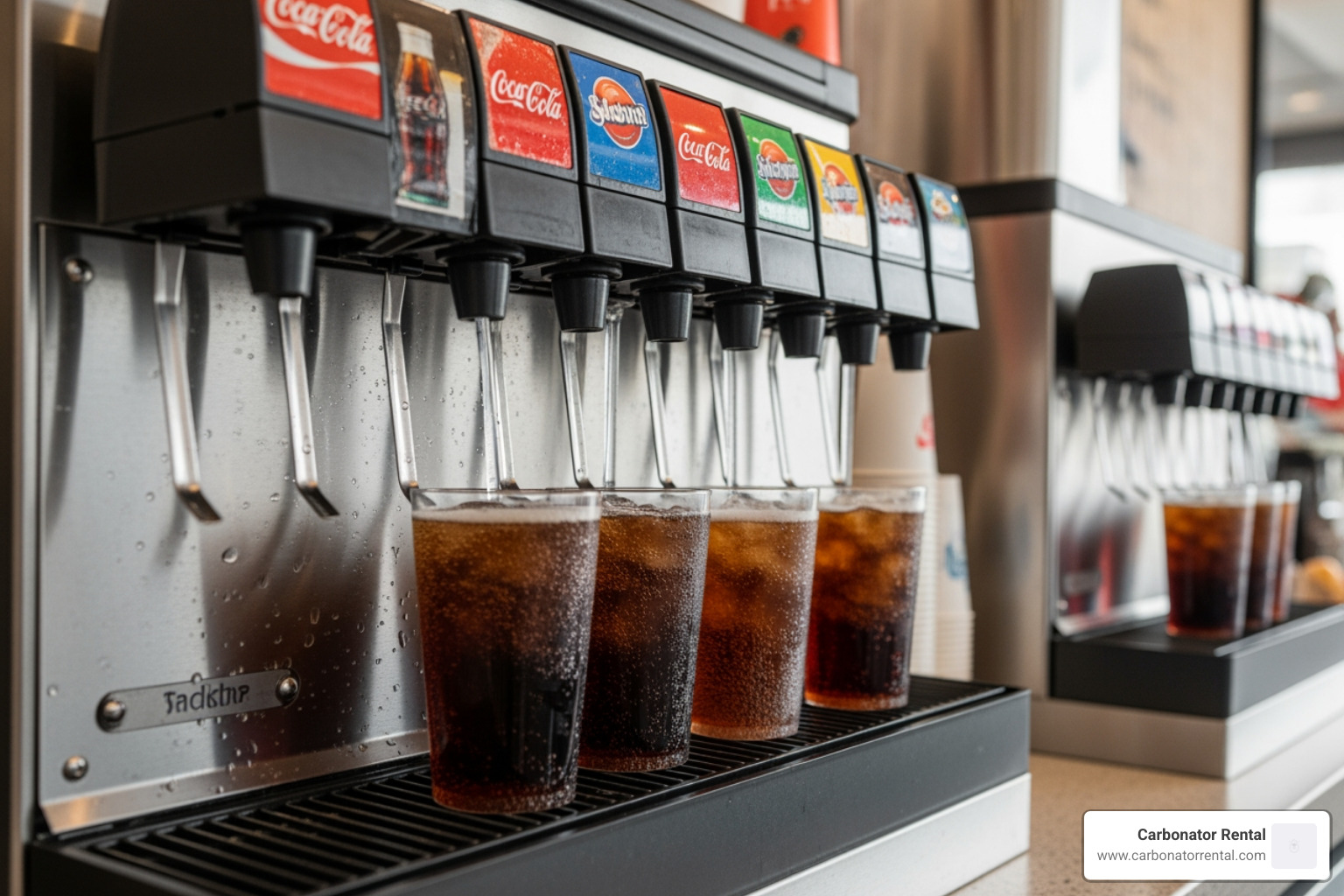
Soda machine troubleshooting is essential for any restaurant, bar, stadium stand, or café that depends on fast, consistent beverage service. One off-taste or a flat pour can trigger refunds, lost combo sales, and slower lines during peak periods. The good news: you do not always need to wait for a technician. Many common dispenser issues can be diagnosed in minutes with a repeatable process and a few checks in the back room.
How a commercial soda system is supposed to work
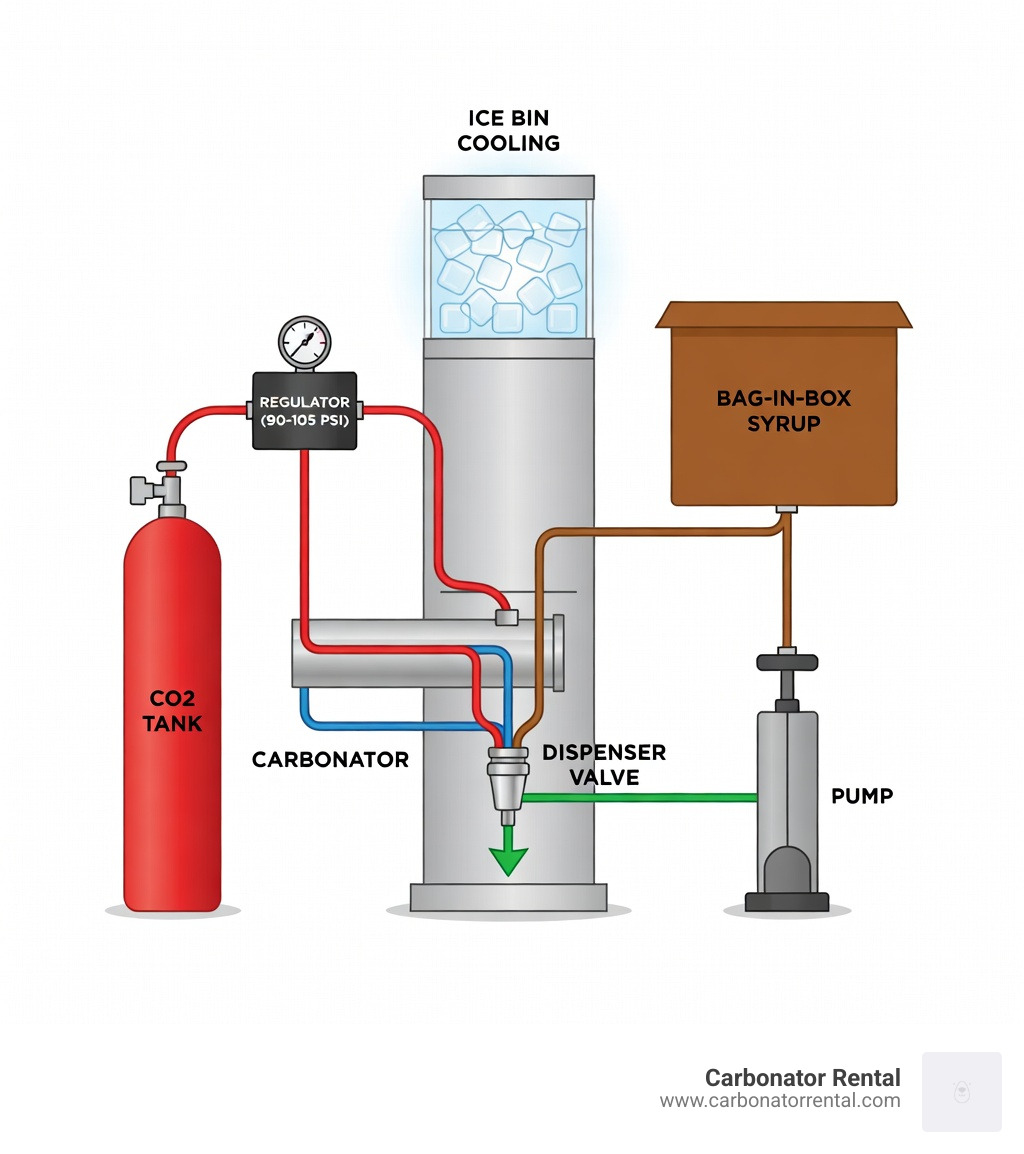
A fountain is a simple mix of three ingredients that have to arrive at the valve at the right pressure and temperature:
- CO2 comes from a cylinder or bulk tank, through a regulator, to the carbonator and/or syrup pumps.
- Water feeds the carbonator, where it absorbs CO2 to become soda water.
- Syrup comes from a bag-in-box (BIB) through a connector and pump to the dispensing valve.
If any one of those three streams is missing, warm, or incorrectly pressurized, the drink quality changes immediately.
| Problem | Quick Check | Likely Fix |
|---|---|---|
| Flat drinks | CO2 < 400 PSI | Replace tank; set to 90-105 PSI |
| Only syrup | Water shut off | Open valve; check carbonator power |
| Only water | Empty BIB | Replace syrup box; clean connector |
| Foamy drinks | Low ice | Add 6" ice over cold plate |
What to check first (a 60-second triage)
Before you start disassembling anything, identify the symptom and isolate the category of failure:
- Is the issue on one flavor or all flavors? One flavor usually means a BIB/connector issue; all flavors points to CO2, water, carbonator power, or temperature.
- Are you hearing pumps run continuously? That often indicates a supply problem (empty BIB or gas issue).
- Is the beverage cold? Warm product creates foam and weak carbonation, even when pressures are correct.
Why this saves money
Fast troubleshooting reduces:
- Downtime during lunch and dinner rushes
- Wasted syrup and CO2 from purging and remakes
- Service calls for issues that are simple, safe fixes (ice level, empty BIB, loose connector)
For anything involving pressurized gas or repeated failures, professional service is still the smartest path. Carbonator Rental supports accounts across Philadelphia PA, Newark NJ, Atlantic City NJ, Cherry Hill NJ, Princeton NJ, and Wilmington DE, with beverage equipment rentals, syrup delivery, and food-grade gas programs designed to keep your pours consistent.
Essential Soda Machine Troubleshooting for Flat Drinks
Flat soda almost always means the carbonation process is not happening correctly. Start with your gas supply, because even a perfect carbonator cannot carbonate without stable CO2 pressure. If you manage multiple locations or high volume, consistent deliveries of Bulk CO2 Tanks or Gas Cylinders help prevent surprise outages.
Step 1: Confirm the CO2 tank is not empty
Look at the high-pressure gauge on the primary regulator.
- If it reads under 400 PSI, the tank is effectively out for beverage use.
- Make sure the tank valve is fully open (turn counterclockwise until it stops).
If the tank was recently changed, verify the washer/O-ring is seated correctly and the connection is snug. A bad seal can cause slow leaks and inconsistent carbonation.
Step 2: Check regulator pressure to the carbonator
- Check the Regulator: Pressure to the carbonator should be set between 90 and 105 PSI.
If the regulator is set too low, the water will not absorb enough CO2. If it is set too high, you can create unstable pours or stress components. Only adjust within the manufacturer range for your specific carbonator.
Step 3: Verify carbonator power and water feed
- Verify Power: Ensure the carbonator is plugged into a working outlet.
Also confirm the water supply valve feeding the carbonator is open. A carbonator that loses either power or water will stop producing properly carbonated water.
Step 4: Purge after a CO2 outage
- Purge the System: If the CO2 ran out, run the soda water valve for several minutes to purge still water until the bubbles return.
After CO2 is restored, there is often a slug of non-carbonated water sitting in the lines. Purging clears the lines so the next customer does not get a flat drink.
When to escalate
If you have adequate CO2 pressure, the regulator is set correctly, and the carbonator is powered but the soda water remains flat, the issue may be internal (pump, switch, or tank problem). At that point, schedule service rather than guessing.
For detailed gas safety standards and pressure guidelines, consult the Compressed Gas Association.
Fixing Dispensing Issues: Only Syrup or Only Water
Dispensing problems usually come down to one question: is the mix valve getting both ingredients at the right pressure? Use these checks to isolate the issue quickly.
If you get only carbonated water
If you get only soda water, the syrup side is interrupted. Check your Bag-in-Box Syrup first.
- Confirm the BIB is not empty and is within its recommended use window.
- Inspect the connector for dried syrup crystals that can prevent a proper seal.
- Clean and re-seat the connector.
Ensure the box isn't empty and the connector is clean. Syrup buildup can prevent a proper vacuum seal. Clean the connector with warm water and re-seat it firmly.
Prime the syrup line after a change
Modern Beverage Dispensing Equipment often requires a priming cycle after changing a BIB to push out air bubbles and ensure a consistent mix. If your unit has a menu setting or manager mode, prime for the recommended duration so the first few pours are not weak.
If you get only syrup
If you get only syrup, the water side is usually the culprit.
- Verify the water supply valve to the dispenser/carbonator is open.
- Look for kinked or pinched water lines behind the unit.
- Confirm the carbonator is powered; without it, you may lose the pressurized water needed for proper mixing.
If one flavor is wrong but others are fine
That typically points to a single BIB, connector, or pump. Swap in a known-good syrup box and re-seat the connector to confirm. If the issue follows the box, it is supply-related; if it stays with the line, it is equipment-related and may need service.
For operators who want fewer surprises, Carbonator Rental can pair syrup delivery with equipment support so you are not troubleshooting during a rush.
Temperature and Foam Control
Foamy soda is typically a temperature problem. CO2 is stable in cold liquid (ideally 38°F). If the liquid is warmer than 40°F, the gas flashes out at the nozzle, creating foam and a weak-tasting drink.
Confirm the cooling method is doing its job
Most drop-in soda fountains rely on an ice bin and cold plate. If the plate is not cold, everything downstream suffers.
- The 6-Inch Rule: Maintain at least 6 inches of ice over the cold plate at all times.
- Watch for Bridging: Break up hollow ice caverns to ensure the plate is cooled.
If your restaurant is busy, assign ice checks by shift. A fountain can look full from the top while the cold plate underneath is exposed.
Reduce turbulence at the point of dispense
Even when temperature is correct, turbulence can create foam.
- Nozzle Sanitation: Clean nozzles and diffusers daily in sanitizing solution to prevent turbulence. This is a core part of our Beverage Equipment Maintenance Services.
Also confirm staff are not pressing cups against the nozzle or partially closing the lever, which can aerate the stream.
Quick foam diagnosis
- Foam on all valves: usually warm product, low ice, or cooling failure.
- Foam on one valve: likely a dirty diffuser/nozzle or a single warm line.
- Foam that settles flat: indicates CO2 breaking out due to temperature.
Keeping product cold is one of the easiest ways to protect syrup usage, improve taste, and speed up service.
Safety and Preventive Maintenance
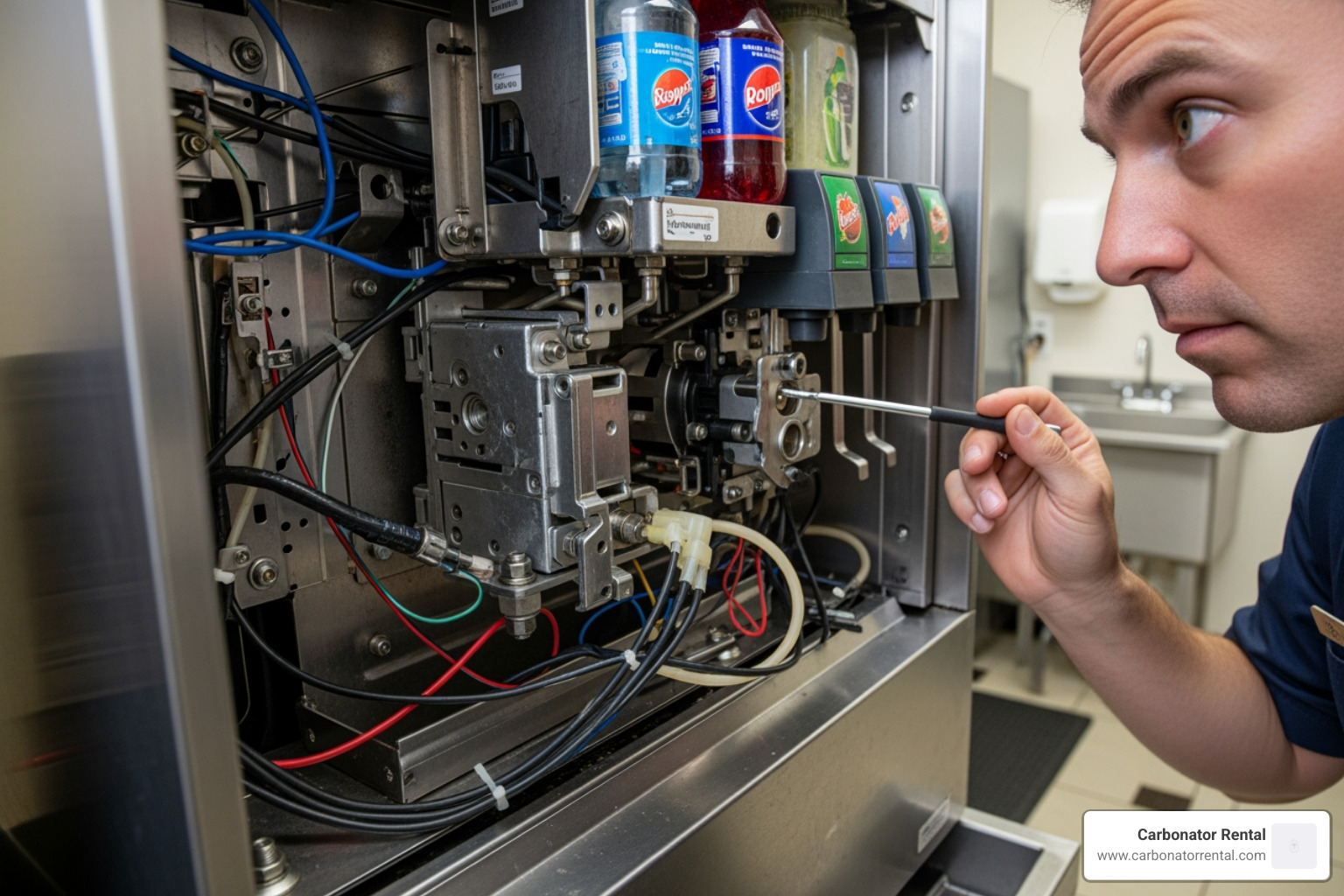
Safety is vital when handling CO2. It is an odorless gas that can displace oxygen in confined spaces. Treat any gas room, basement, or walk-in area that stores cylinders as a safety-critical zone.
CO2 safety basics for restaurants and bars
- Keep storage areas ventilated and avoid blocking airflow with boxes or kegs.
- Secure cylinders upright with chains or straps.
- Train managers on how to shut off the tank valve in an emergency.
- Install a CO2 monitor where gas is stored and where staff work nearby.
If you ever hear constant hissing, smell sanitizer-like odors from a leak check solution, or see persistent frost on regulators/lines outside of heavy use, stop and investigate. When in doubt, call for service.
Preventive maintenance schedule
A small routine prevents the majority of beverage downtime and quality complaints:
- Daily: Clean nozzles and check ice levels.
- Monthly: Inspect CO2 lines for leaks or frost.
- 6 Months: Replace water filters to protect internal valves.
Additional best practices
- Label filters with the install date so changes do not get missed.
- Keep spare nozzles/diffusers on hand so you can swap and soak.
- Document recurring issues (which valve, what symptom, what time of day). Patterns help identify a failing component before it becomes a shutdown.
Ensure your storage area is ventilated and install a CO2 monitor. Use approved beverage-grade sanitizers to avoid aftertastes.
Frequently Asked Questions
Why does my soda taste "off"?
This is usually a filtration issue. Replace your water filter every 6 months. Also, ensure your ice bin is clean, as old ice absorbs kitchen odors.
If the taste issue affects only one flavor, also check that flavor's BIB date and connector cleanliness. Sticky buildup at the connector can cause inconsistent syrup draw and odd flavor notes.
What is a "runaway" pump?
A clicking sound from the back room indicates an empty BIB. The pump is sucking gas instead of liquid. Disconnect the connector immediately to prevent damage.
If the BIB is not empty, a runaway pump can also point to a loose connection or gas feed issue to the pump. Make sure fittings are tight and the gas supply is stable.
How do I reset my carbonator?
Unplug the unit, shut off water and CO2, and pull the relief valve to vent pressure. Restore water first, then power, then CO2.
After resetting, run soda water until it returns to normal carbonation. If the carbonator repeatedly needs resets, schedule service to avoid an unexpected failure during peak hours.
Conclusion
Mastering soda machine troubleshooting protects your bottom line: better taste, faster lines, less waste, and fewer emergency shutdowns. Many issues are simple (ice level, empty BIB, a connector that needs cleaning). Others involve pressurized gas, electrical components, or internal carbonator parts where professional support is the safer and faster choice.
Since 1955, Carbonator Rental has been "Powering the Perfect Pour" across Philadelphia, Newark, and Wilmington. We provide flexible rentals for soda fountains, bar guns, and nitrogen generators, plus dependable syrup delivery and food-grade gas programs that help you avoid outages.
How Carbonator Rental helps you prevent downtime
- Scheduled delivery of CO2 and bag-in-box syrup so you are not running out mid-shift
- Equipment installation and configuration for consistent pressure and proper ratios
- Maintenance programs that keep nozzles, diffusers, filters, and cooling performing as designed
- Responsive local support for restaurants and bars across Pennsylvania, New Jersey, and Delaware
Whether you are in Atlantic City, NJ, Cherry Hill, NJ, or Princeton, NJ, our family-run business offers the local support you need to keep your beverages flowing.
