

Why the Right Syrup for Soda Machines Can Make or Break Your Beverage Program
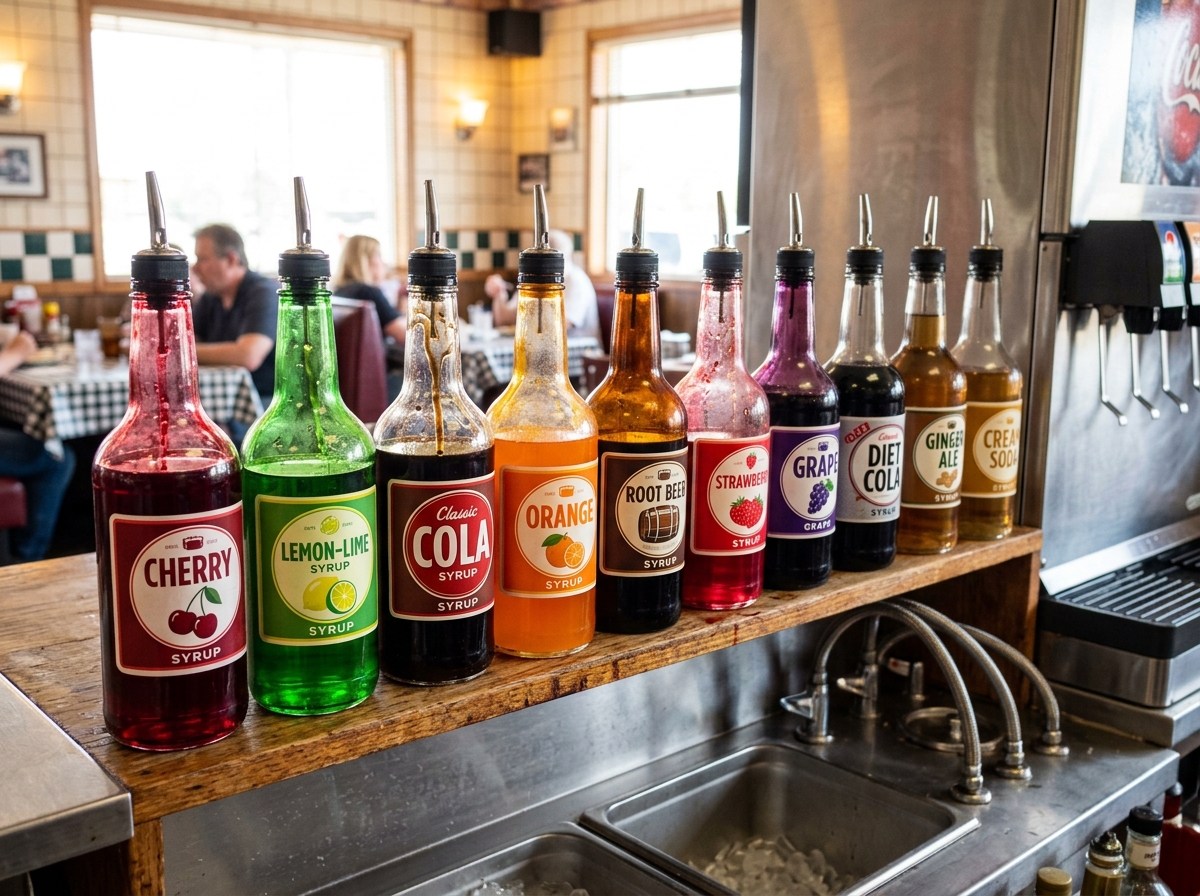
Syrup for soda machines is a concentrated liquid flavoring that mixes with carbonated water inside a fountain dispenser. In most commercial beverage programs, the standard format is a bag-in-box (BIB) package: a sealed syrup bag protected inside a cardboard case and connected directly to a soda fountain, beverage tower, or bar gun.
For restaurants, bars, cafes, stadium concessions, and other high-volume operations, BIB syrup is the practical choice because it supports consistent drink quality, efficient storage, and predictable costs. When your equipment is set up correctly and your syrup supply is reliable, every pour tastes the way it should. When it is not, customers notice watery drinks, flat carbonation, or flavor inconsistency right away.
| Format | Common Sizes | Mix Ratio | Finished Yield | Approx. Servings (12 oz) |
|---|---|---|---|---|
| Bag-in-Box (BIB) | 2.5 gal / 5 gal | 5:1 | 15 gal / 30 gal | ~160 / ~320 |
| Branded Syrup | 2.5 gal / 5 gal | 5:1 | 15 gal / 30 gal | ~160 / ~320 |
That is why the right supplier matters as much as the syrup itself. Carbonator Rental supports beverage programs with more than product delivery alone. The company provides commercial beverage equipment, food-grade gas, scheduled syrup delivery, installation, maintenance, and emergency support for businesses across Philadelphia, Newark, Atlantic City, Cherry Hill, Princeton, Wilmington, and surrounding areas in PA, NJ, and DE. For operators who need dependable service without unnecessary downtime, that full-service approach can make a major difference.
Choosing the right syrup for soda machines also affects labor, waste, and profitability. A properly connected and calibrated BIB system helps staff serve drinks quickly, reduce mess, and use nearly all of the syrup in the box. With the right setup, you get a cleaner operation, more consistent taste, and a beverage station that works as hard as your team does.
Understanding Bag-in-Box (BIB) Syrup for Soda Machines
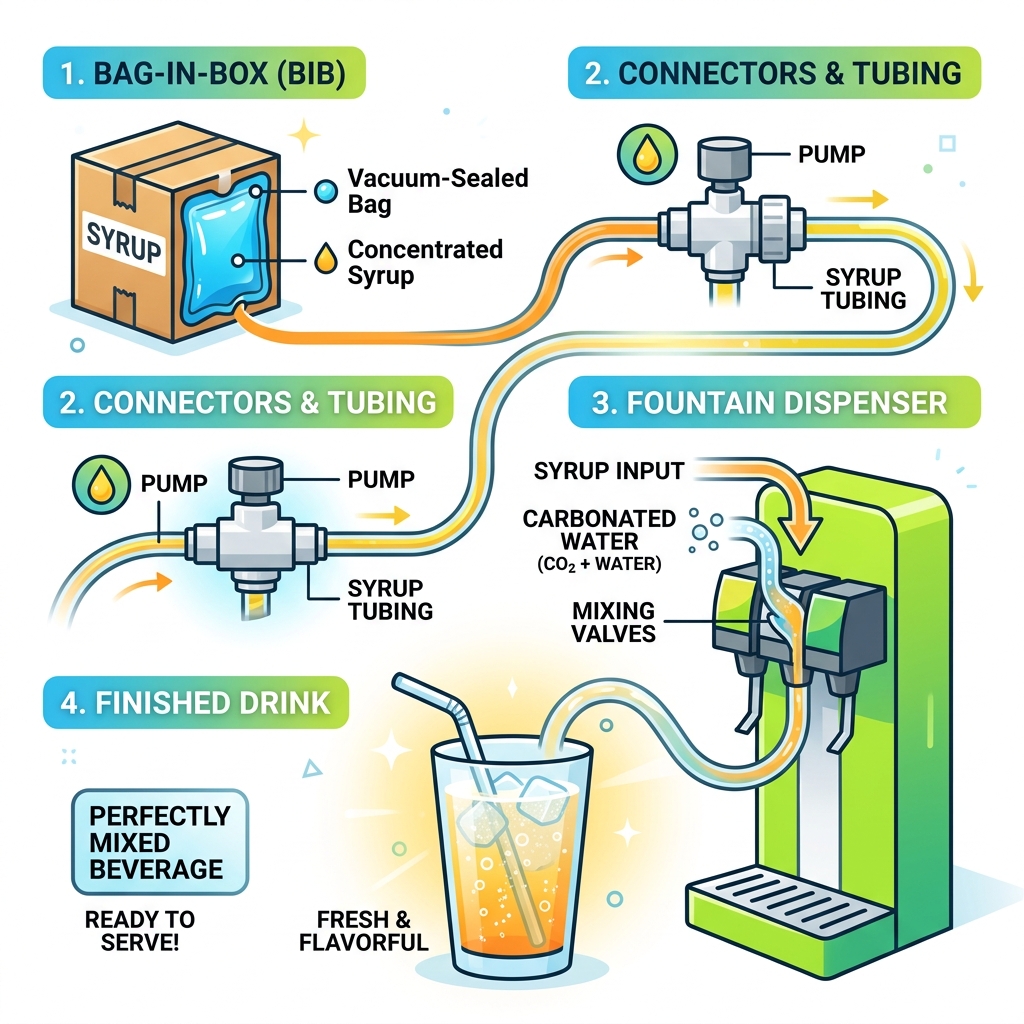
In busy Philadelphia restaurants, Newark foodservice operations, or Atlantic City bars, the bag-in-box-syrup system is the industry standard for a reason. A BIB uses a durable multi-layer plastic bag filled with concentrate and protected by a corrugated cardboard box. The bag stays sealed until it is connected to the dispensing system, helping preserve freshness and maintain product integrity during storage and delivery.
When the syrup is connected to a fountain dispenser or bar gun, a pump pulls concentrate through the line and sends it to the valve where it mixes with chilled carbonated water. Because the internal bag collapses as product is used, the system is efficient and helps operators use nearly every drop. That means less leftover product, less handling, and less waste than rigid containers.
BIB packaging also fits the realities of commercial back-of-house storage. Boxes stack neatly, are easier to move than cases of bottles, and simplify inventory management for busy teams. For multi-location operators or venues with limited storage, that space efficiency matters.
Another important advantage is compatibility. Commercial BIB systems can be paired with the proper connectors, pumps, and dispensing equipment for a smooth, high-volume workflow. With the right supplier, businesses can align syrup delivery with equipment service, helping avoid supply gaps and setup issues that interrupt beverage sales.
Mixing Ratios and Yield: Maximizing Your Investment
In professional beverage service, yield is the amount of finished soda produced from concentrate, and it has a direct impact on cost control. Most syrup for soda machines is designed for a 5:1 ratio, meaning five parts water are mixed with one part syrup. That standard helps operators forecast inventory, estimate serving counts, and protect margins.
- 5-Gallon BIB: Yields 30 gallons of finished beverage, or about 320 12-oz servings.
- 2.5-Gallon BIB: Yields 15 gallons of finished beverage, or about 160 12-oz servings.
Those numbers become especially useful when planning weekly syrup orders, pricing fountain drinks, or preparing for busy shifts and special events. If a location pours a high volume of soft drinks, understanding the true finished yield helps avoid both over-ordering and running out during service.
Consistency depends on proper calibration, often called "Brixing." Brix refers to the syrup-to-water balance that determines sweetness and flavor strength. If the ratio is off, the finished drink may taste weak, overly sweet, or simply inconsistent from one pour to the next. That can lead to customer complaints, wasted syrup, and lost repeat business.
Water temperature and carbonation also matter. Chilled water, ideally below 40 degrees F, supports better carbonation and a cleaner taste. Proper gas pressure, maintained equipment, and correctly adjusted valves all contribute to the final result. For operators, the goal is simple: every drink should taste the same whether it is the first pour of the day or the hundredth. Reliable service and regular maintenance help make that possible.
Essential Equipment and Maintenance for a Perfect Pour
A professional fountain setup depends on more than syrup alone. To move concentrate from storage to the cup efficiently, operators need a complete and well-maintained dispensing system. Core components typically include:
- Connectors: QCD or Encore screw-on styles matched to the syrup package.
- Syrup Pumps: Air-driven pumps that pull concentrate from the BIB and move it through the lines.
- Cold Plates: Equipment that chills the water and helps support proper drink temperature.
- Gas Systems: Food-grade CO2 tanks and nitrogen generators used in commercial beverage service.
- Dispensing Equipment: Soda fountains, bar guns, and beverage towers sized for the operation.
When these parts work together correctly, service is faster, taste is more consistent, and staff spend less time dealing with slow pours or equipment problems. Carbonator Rental supports businesses with equipment delivery, installation, rental and leasing options, scheduled service, and maintenance programs that help reduce expensive downtime.
Maintenance is essential because syrup residue can build up over time. Drain and line issues, including the slimy buildup often called "sugar snakes," can create clogs, odors, and sanitation concerns if ignored. Daily attention to cleanup and regular line care help protect both flavor quality and equipment performance.
A simple preventive routine can include flushing where appropriate, checking connectors for leaks, inspecting pumps, and keeping the surrounding beverage station clean. Using suitable biodegradable cleaning products and staying on top of service intervals can extend equipment life and help avoid emergency disruptions during peak business hours.
Beyond Cola: Exploring Flavors and Specialty Options
While cola remains a top seller, a strong beverage program usually offers more than one core soft drink. Through wholesale-bag-in-box-syrup-distribution, operators can build out a lineup that fits their customers, menu style, and service model.
Popular options often include root beer, ginger ale, lemon-lime, and fruit-forward selections such as strawberry lemonade. For bars and restaurants, BIB juice concentrates like orange and cranberry can also be useful for mixed drinks and non-alcoholic menu items. Diet and zero-sugar choices are increasingly important as customers look for more variety and lower-sugar alternatives.
Offering multiple flavors can do more than improve selection. It can help increase check averages, support combo meals, and create a better guest experience for families, lunch crowds, and event traffic. A thoughtful syrup mix also gives operators flexibility to match local preferences or seasonal demand without overcomplicating storage and service.
Most BIB syrups are shelf-stable and should be stored in a cool, dry place between 40 degrees F and 77 degrees F. Many BIB juice products also offer a shelf life of about 10 months when unopened, which makes inventory planning easier for commercial locations managing both everyday volume and rush periods.
Why Local Full-Service Distribution Matters
Running a beverage program in Philadelphia, Newark, Wilmington, Cherry Hill, Princeton, or Atlantic City requires more than ordering syrup and hoping everything arrives on time. Equipment issues, gas interruptions, or missed deliveries can quickly affect sales and service. That is why local support matters.
Carbonator Rental has been "Powering the Perfect Pour Since 1955." As a family-run company serving PA, NJ, and DE, the business focuses on dependable personal service for restaurants, bars, cafes, breweries, and other commercial beverage accounts.
Key benefits of working with a full-service local supplier include:
- Scheduled Deliveries: Keep BIB syrup, CO2, and beverage gas stocked based on your usage.
- Flexible Rental and Leasing: Reduce upfront costs on soda fountains, bar guns, and gas equipment.
- Installation and Maintenance: Start with the right setup and keep it running properly.
- Emergency Service: Get fast local support when a dispenser, pump, or gas system goes down.
- Single-Source Convenience: Coordinate equipment, syrup, and gas through one trusted provider.
For operators, that means fewer service gaps, less stress for staff, and better consistency for customers. Instead of piecing together equipment, syrup, and gas from multiple sources, businesses can streamline beverage operations with one experienced partner.
Frequently Asked Questions about Soda Syrups
What is the shelf life of bag-in-box syrup?
Unopened BIB syrup is generally good for 10 months when stored properly in a cool, dry place. Once connected, using it within 6 to 8 weeks is a good practice for maintaining crisp, reliable flavor.
How many 12 oz drinks does a 5-gallon BIB produce?
A 5-gallon BIB yields about 30 gallons of finished beverage at a standard 5:1 ratio, which works out to roughly 320 12-oz servings. Actual servings may vary depending on ice usage and cup size.
Do I need to refrigerate my soda syrup boxes?
No. Syrup for soda machines is typically shelf-stable at room temperature, ideally between 40 degrees F and 77 degrees F. In most commercial systems, the cooling happens at the dispenser through the cold plate or related chilling equipment.
Why does my fountain drink taste weak or too sweet?
That usually points to a calibration, temperature, carbonation, or syrup flow issue. If the ratio is off, the beverage profile changes immediately. Regular maintenance and professional service help keep pours consistent.
What types of businesses benefit from BIB syrup systems?
Restaurants, bars, cafes, concession stands, entertainment venues, and other commercial operations benefit from BIB systems because they are efficient, scalable, and designed for high-volume dispensing.
Conclusion
Your fountain beverage program should support profits, not create operational headaches. Choosing the right syrup for soda machines is part of that equation, but so is having the right equipment, the right gas supply, and the right service partner behind it.
Carbonator Rental helps commercial operators simplify beverage service with bag-in-box syrup, soda fountains, bar guns, CO2 tanks, nitrogen generators, beverage gas systems, installation, maintenance, delivery, and emergency support. For businesses across Philadelphia, New Jersey, and Delaware, that local full-service model helps reduce downtime, improve consistency, and keep drinks pouring the way customers expect.
Whether you are opening a new location, upgrading an existing fountain setup, or looking for a better syrup and gas delivery partner, dependable support can make all the difference.
